Sample Nonprofit Grant Proposal Guide
Oct 22, 2026 · 11 min read

A polished sample nonprofit grant proposal won't fix a fundraising process built around sending the same application to every possible funder. Reusable language can save drafting time, but if your team hasn't checked eligibility, priorities, and reporting demands first, a polished mismatch is still a mismatch.
That distinction matters because applications take real staff time. Nonprofits reportedly spend an average of 15 hours per application and submit 10–15 applications for every grant secured, according to the 2025 sector survey summary. Those figures point to an operational problem, not a shortage of templates. More applications may mean more deadlines, revisions, attachments, and reporting obligations to manage.
Table of Contents
- Rethinking the Sample Nonprofit Grant Proposal
- Core Components of a Winning Proposal Structure
- Triage and Funder Alignment Before Drafting
- Connecting Budgets to Measurable Outcomes
- Building a Minimum Viable Proposal System
- Leveraging Discovery Tools for Strategic Alignment
Rethinking the Sample Nonprofit Grant Proposal
Reviewers can spot a recycled proposal within the first page. A sample proposal earns its keep when it shows how a funder's requirements can be answered clearly, and it becomes a liability the moment staff treat it as a universal script. Funders differ in what they support, how they assess projects, and what they expect after an award. Borrow the structure, then rebuild the argument for each reader.
The funding environment makes that selectivity worth the effort. In the Urban Institute's study of nonprofits covering 2021–2023, nearly two in three organizations had discussed government grants or contracts with public officials. In 2022, 68% of nonprofits received at least one government grant or contract, and government agencies supplied 29% of nonprofit revenue, according to the Urban Institute's national findings. Government dollars anchor programs and budgets, and they bring eligibility rules, administrative demands, and compliance obligations that punish a careless application.
Keep reusing content, but build it as a modular proposal system: a reliable set of organizational facts, evidence, and narrative components that staff adapt to each specific opportunity. A paragraph about your organization's history may travel between applications with minor edits. Your statement of need, project plan, and outcomes section should be reshaped around the funder's actual priorities every time.
Build a library of reusable components
A useful evidence library stores approved, current material alongside its source and owner: mission and program descriptions, financial and governance information, local needs evidence, participant feedback, evaluation methods, and budget assumptions. Label each item clearly so a writer can tell what is verified, what needs updating, and what is cleared for external use.
Skip that labeling and the library rots. Copying an old proposal carries forward stale figures, language pitched at a different audience, claims the organization can't substantiate, and commitments the current program can't deliver.
Practical rule: Reuse the evidence, but rewrite the argument for the funder.
A focused application strategy also protects time for relationship-building and program delivery. The sector survey cited earlier reports that 58.1% of respondents expected application volume to increase, while 33.3% of funders prioritized reducing grantee burden. Chasing volume for its own sake burns staff hours. Weigh each opportunity against the cost of applying and, if you win, the cost of administering the award.
Core Components of a Winning Proposal Structure
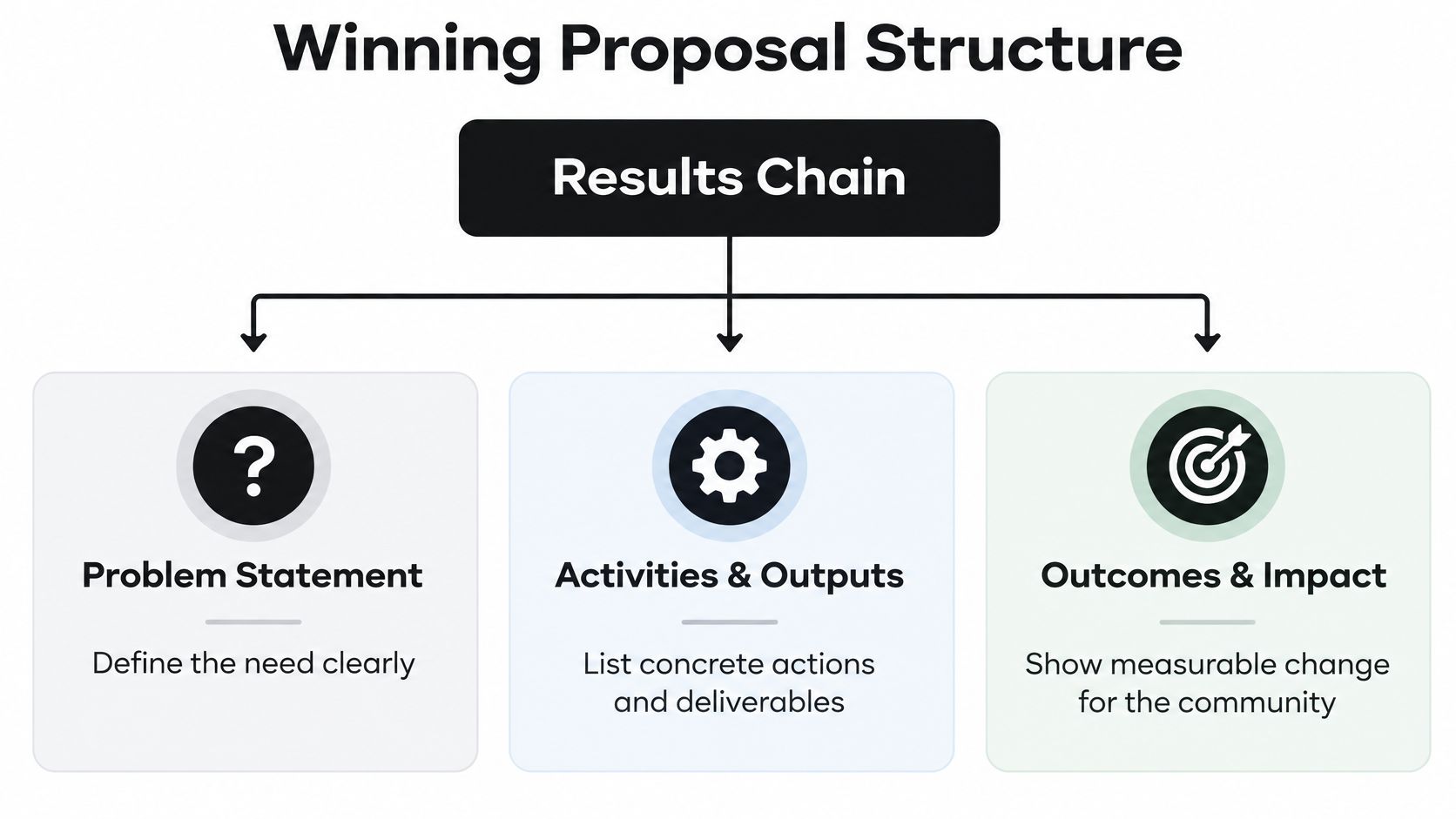
A persuasive proposal isn't a stack of separate essays. It's a traceable results chain: evidence of a problem leads to a defined response, the response produces specific activities and outputs, and the evaluation plan tests whether the intended change occurred. Reviewers should be able to follow that logic without filling in gaps for you.
Make the evidence meaningful to the people affected
Start with a specific problem and the best evidence available to your organization. Baseline data helps show the starting point, but numbers alone may not explain why people encounter barriers or what a useful response looks like. Administrative records can establish patterns in service use. Participant interviews or listening sessions can help clarify how program design should respond.
Community-centered evidence requires care. Invite participants to share perspectives voluntarily, explain how their input will be used, and avoid presenting individual experiences as if they speak for everyone. When a program is new and longitudinal data isn't available, say so. Combine available records with ethically gathered qualitative evidence, clearly label preliminary findings, and describe how the team will learn as the work proceeds. Honest uncertainty is more credible than invented precision.
A proposal should also show what changed because the organization listened. For example, explain how participant feedback informed service hours, referral practices, accessibility, or the way staff communicate with families. If the organization collects feedback, say who reviews it and how it affects decisions. Funder guidance such as the Funder Action Menu on shared insight offers a useful reference for thinking about how people served can influence program choices.
Connect the planned work to measurable change
Objectives turn a broad ambition into something the team can assess. “Improve access” doesn't tell a reviewer which population the project will serve, what access means in practice, or how the organization will know whether it changed. Define the intended change, its timeframe, the indicator, the data source, and who will monitor progress.
Then connect the objective to the work. If the proposal promises a new service, name the activities and staff needed to deliver it. Identify the outputs the team will track, such as services provided or participant engagement, and distinguish them from outcomes that reflect change for participants or the community.
For organizations exploring government export support, Everglow Prosperity's guide to how to apply for EMDG can help illustrate how a specific funding program's application requirements shape the information an applicant needs to prepare. The lesson applies broadly: use a sample to understand the kind of logic a proposal needs, then follow the relevant funder's own instructions.
Triage and Funder Alignment Before Drafting
Don't start with a blank page. Start with a decision: does this opportunity earn a place on the team's application list? Eligibility and alignment are gates to settle before anyone writes a word of narrative.
The competition varies by funding type. In the grant success-rate discussion published by GrantWatch, successful nonprofit federal applications are estimated at approximately 25%, while foundation grants are often estimated at roughly 15%–30%. The same source cautions that actual odds depend on the program, the applicant pool, eligibility, and whether applications are invited, and it reports a survey of 71 funded grant writers in which 67% named funder misalignment as the most frequently encountered rejection mistake. Figures like these argue for careful triage before any drafting begins.
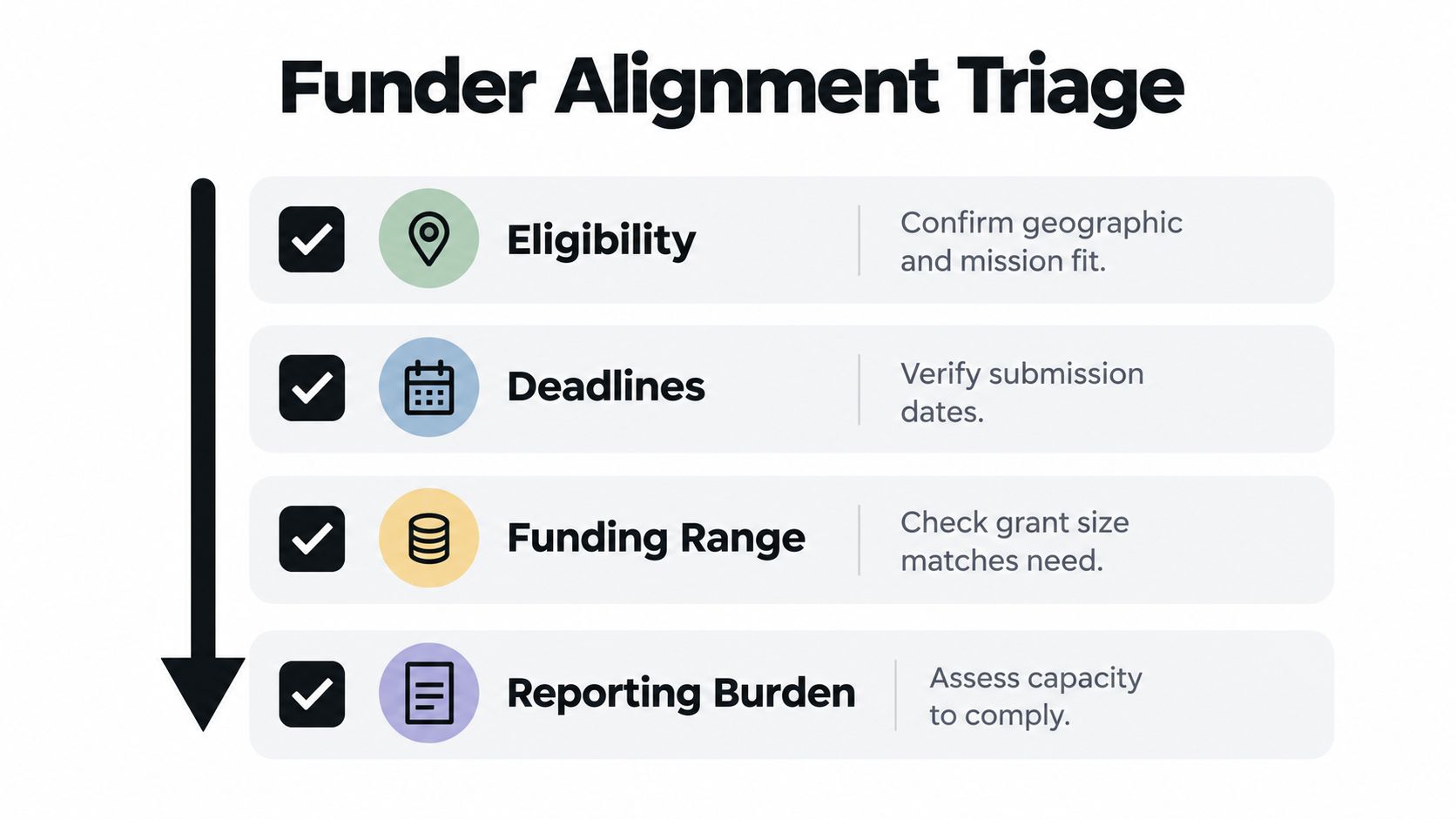
Use gates before you use prose
Check each opportunity in a consistent order:
- Eligibility: Confirm that the funder accepts your applicant type, serves your geography, and supports the population or activity described.
- Mission and program fit: Compare the proposed work with the funder's published priorities. A shared topic falls short when the actual project sits outside the funder's interests.
- Funding and match: Check whether the possible award suits the project and whether matching requirements or other conditions are manageable.
- Capacity and reporting: Assess what staff time, financial controls, data collection, and reporting the award would require.
- Deadline and instructions: Verify the submission date, required forms, attachments, and formatting rules before assigning writing work.
Look at public guidance and prior awards where available. Past awards are useful as evidence of fit rather than as predictions: check whether the funder has supported projects with similar geography, scope, and organizational capacity.
Let a second person challenge the fit
Once an opportunity passes the gates, score its alignment against the funder's stated priorities and write a short rationale for pursuing it. The rationale should say why the project fits, what evidence supports the match, and which requirements still need confirmation.
Write it down and keep it. A one-page alignment memo becomes a reusable record: the next application to a similar funder starts from an argued position instead of a blank analysis, which cuts the administrative cost of running several applications at once.
A second reviewer can then check eligibility and instructions while a colleague tests whether the claims have evidence, measurement methods, budget support, and a feasible delivery plan. Misalignment stays costly even when the application is technically complete, and the survey figures above show how often reviewers encounter it.
Before relying on a general guide to grants for nonprofits, confirm the specific opportunity's own requirements. When an application involves a specialist field, a resource such as Planstone's submission article for education providers can help a team think through submission demands without replacing the funder's own instructions.
Connecting Budgets to Measurable Outcomes
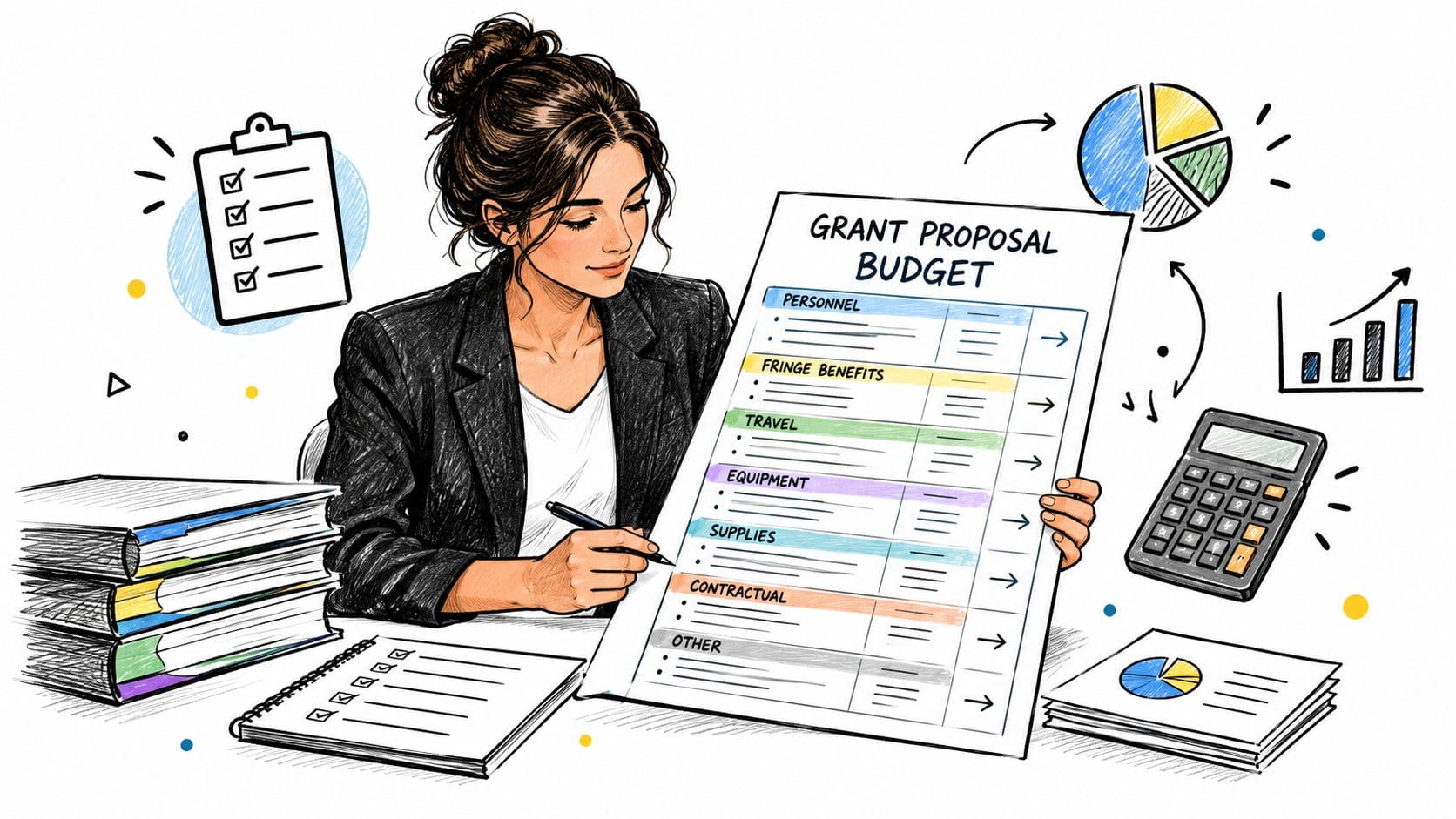
The budget should read like the financial version of the work plan. If the narrative promises activities the budget can't support, reviewers have reason to doubt whether the organization can deliver. If a cost appears in the budget but nowhere in the project description, the proposal hasn't explained why the funder should pay for it.
The federal selection criteria described in 34 CFR § 75.210 favor targets connected to strategies, activities, resources, outputs, and outcomes, as well as reliable administrative data and a credible implementation method. Use that logic to test the whole proposal, not just the evaluation section.
| Budget Line Item | Activity | Output | Measurable Outcome |
|---|---|---|---|
| Program staff time | Deliver the proposed service | Service records completed | Change in the defined participant indicator |
| Materials and supplies | Support planned sessions or services | Materials distributed or used | Progress toward the stated program objective |
| Evaluation support | Collect and review program data | Data summaries prepared | Findings used to assess outcome progress |
| Participant access support | Reduce a stated barrier to participation | Support provided to eligible participants | Participation changes in the intended population |
These are illustrative categories, not a budget prescription. Replace them with costs and measures grounded in the project's actual design. Each budget justification should say what the expense supports and why the cost is needed to produce the activity or output.
Design evaluation before delivery
Set the baseline, indicator, target, data source, data owner, and review schedule before implementation begins. The Congressional Research Service report on grant evaluation recommends planning evaluation before operations begin, because a persuasive assessment depends on baseline information collected before and during implementation. Don't wait until reporting is due to discover that nobody recorded the information needed to assess progress.
Separate process evaluation from outcome evaluation. Process evaluation asks whether activities happened as planned. Outcome evaluation asks whether the intended changes occurred. Both matter: a project might deliver services as scheduled without achieving the expected change, or outcomes might lag because implementation differed from the plan.
Replace an untestable promise such as “improve access” with a defined measure for a specified population and period. Then explain how the team will collect and review that information and what it will do if progress is off track. A nonprofit accounting guide from HireAccountants can help teams consider the financial systems that support grant administration. For the application itself, use a grant proposal budget template as a starting point, then reconcile every cost against the funder's rules.
Finally, create a compliance matrix from the notice of funding opportunity. Record eligibility, page limits, attachments, match conditions, and formatting instructions, with an owner for each requirement. A persuasive narrative can't make up for a missing document or a submission that ignores the solicitation.
Building a Minimum Viable Proposal System
A reusable proposal system doesn't need elaborate software to work. It needs one reliable place for current organizational information, a way to adapt answers, and a review process that keeps each application tied to its funder. The best system reduces repeated work without disguising generic language as customization.
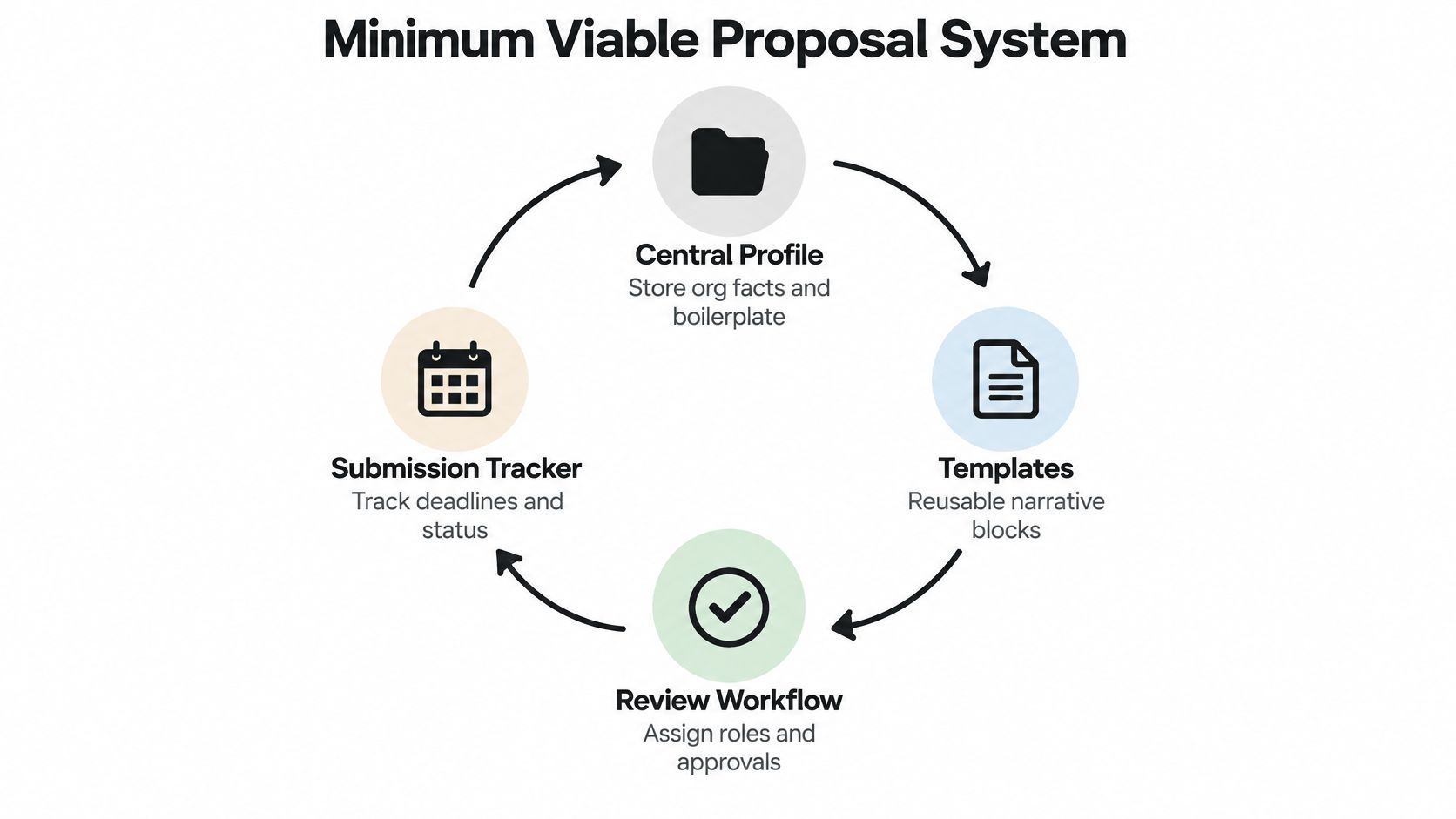
Keep a source of truth
Start with an organizational profile containing approved descriptions, current leadership and program information, financial documents, and evidence used in proposals. Record where each claim came from and who is responsible for updating it. When a fact changes, staff should know which application materials need revision.
Next, create modular narrative blocks. Store answers by purpose, such as organizational capacity, program model, community context, evaluation approach, and financial management. Don't label a paragraph “need statement.” Label the population, location, evidence source, and date it applies to, so writers can select the right material and identify what needs refreshing.
A funder-question crosswalk maps similar prompts across applications. It helps a team reuse a sound answer where appropriate while preserving the funder's wording, emphasis, and format. Keep a version history and clearly mark draft language, approved text, and funder-specific responses. This prevents an old application from becoming the new master.
Make the workflow visible
Assign ownership for the narrative, budget, attachments, approvals, and final submission. The writer can coordinate the package, but program and finance staff should verify claims that depend on their expertise. Use a deadline tracker to record status and outstanding decisions, not just the date an application is due.
Include a go/no-go decision before drafting. If the award's eligibility, geography, likely scope, or reporting demands don't fit the organization's capacity, decline the opportunity. A funder's requirements continue after submission and, if successful, after award. Staff should know who will collect data, prepare reports, manage restrictions, and keep the supporting records.
A reusable answer is a starting point, not a finished response. Tailoring means changing the substance when the funder's priorities, community context, or requested work differ.
Review and update the library after each application. Note what information was hard to find, what changed during review, and which questions exposed a gap in the organization's evidence or process. Over time, the system becomes more dependable because staff improve the source material, not just the formatting.
Leveraging Discovery Tools for Strategic Alignment
A strong proposal sent to the wrong funder is still a poor use of staff time. Discovery tools can help teams build a shortlist from their mission, geography, program area, and funding needs. They don't replace reading the funder's guidelines or contacting a funder when an important requirement is unclear. They help staff decide what deserves that deeper review.
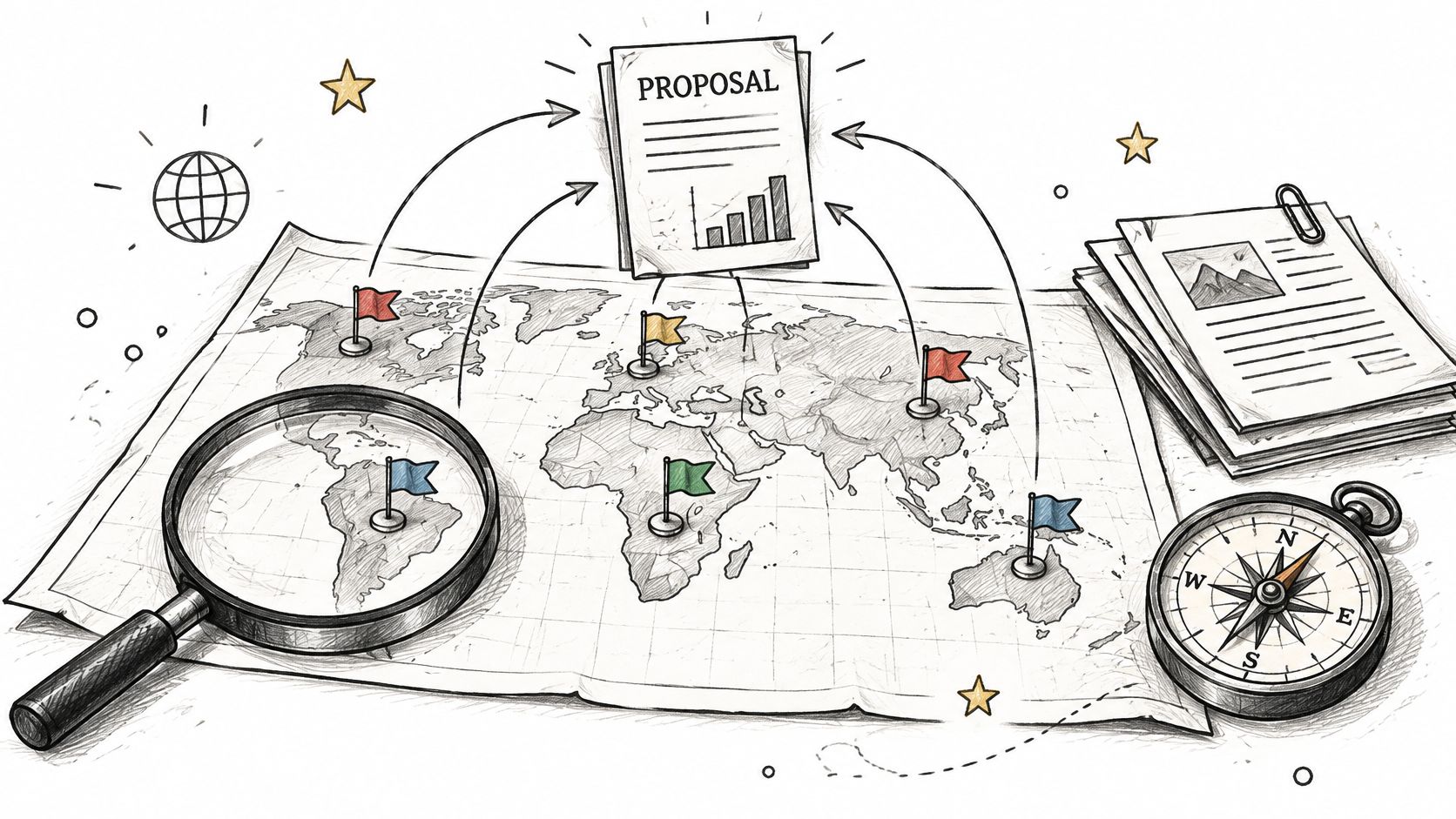
Turn a broad search into a defensible shortlist
Start with filters that reflect genuine constraints: sector, geography, applicant eligibility, and whether the grant's scale fits the project. Then look at a funder's giving history, typical grant size, and openness to new grantees where that information is available. Peer prospecting can reveal funders that support organizations with comparable missions or service models, but a peer's award doesn't prove that your project qualifies.
Score prospects using criteria your team can explain. A useful record includes the funder, opportunity, evidence of fit, remaining questions, likely application burden, and next action. Plain-English reasoning makes the shortlist easier for program and leadership staff to challenge. A score without an explanation can create false confidence, especially when a hidden eligibility condition or reporting requirement changes the decision.
Discovery platforms differ in coverage, filtering, and the information they provide about funders. Compare them based on the research work your team needs: finding private foundations, locating open public opportunities, checking fit, tracking deadlines, or understanding giving patterns. Grantlas is one option for identifying prospective funders and open U.S. grant opportunities, with fit scores, plain-English reasoning, eligibility flags, giving history, peer prospecting, and deadline reminders. Whatever tool you use, verify promising opportunities against the funder's current materials.
A guide to grant research tools can help your team compare ways to organize prospect discovery. The point isn't to collect the longest list. It's to remove obvious mismatches early and focus staff attention on opportunities that fit the organization and its capacity.
For a visual overview of how discovery, fit review, and proposal preparation can work together, watch this short video.
Put discovery into the same workflow as proposal development. Review new matches, confirm requirements, and record a clear go/no-go decision before assigning a writer. That gives your team a stronger starting point than a generic sample: a proposal system that reuses verified evidence, adapts to the funder, and respects the cost of applying.
Grantlas helps nonprofits identify prospective funders and open grant opportunities, with fit reasoning and tools for tracking research and deadlines. Build a focused shortlist before drafting your next proposal, and visit Grantlas to explore how its discovery features can support that process.