10 Operating Grants for Nonprofits in 2026
Oct 23, 2026 · 15 min read

A payroll date is approaching, rent is due, and the grant that covers a popular program won't pay for the finance staff or technology keeping the organization running. That's the bind many nonprofit teams face: a full pipeline doesn't necessarily mean there's flexible money available for core costs.
This list is for grant writers, development directors, executive directors, and consultants looking for operating grants for nonprofits that can support an organization's ongoing work. The opportunities vary widely. Some are explicitly unrestricted; others are limited to a specific mission, place, or type of organization. Award sizes and application windows differ, too, and several listed cycles have already closed.
Use the entries to screen quickly: check whether your organization meets the eligibility rules, whether the grant can cover the costs you actually need funded, and whether the deadline is open or upcoming. Treat an award range as a starting point, not a promise of funding. Then prioritize the strongest prospects before committing staff time to a full application. For other fundraising needs, planning merchandise for fundraising events can sit alongside a grant strategy, but it won't replace reliable operating revenue.
Table of Contents
- 1. Grantlas
- 2. Cummings Foundation, Cummings $35 Million Grant Program
- 3. The Tower Foundation, Short-Term General Operating Grants
- 4. Poetry Foundation, General Operating Support
- 5. The Healing Trust, Operating Grant
- 6. The Seybert Foundation, Core Grants for General Operating Support
- 7. Valley Community Foundation, Core Support
- 8. Bonfils-Stanton Foundation, Community Grants
- 9. California Arts Council, General Operating Support
- 10. Maryland State Arts Council, Grants for Organizations
- Top 10 Operating Grants for Nonprofits: Comparison
- Build Your Prioritized Operating Grant Shortlist
1. Grantlas
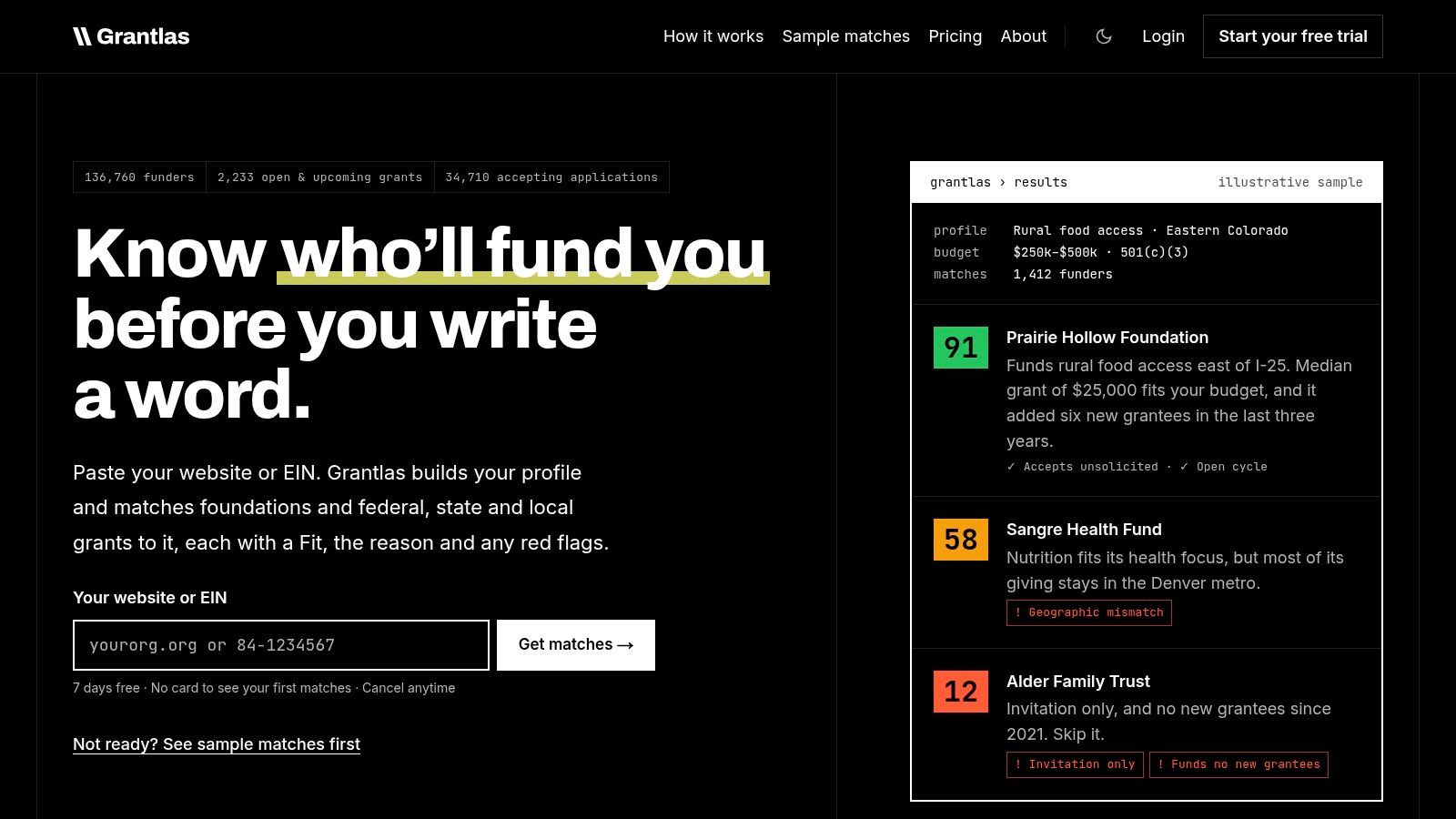
Grant research can consume hours before a team knows whether a funder is a serious fit. Grantlas is a prospecting platform designed to help nonprofits narrow that search before drafting proposals. Add an organization's website or EIN to build a profile, then review ranked foundation and grant matches with plain-English explanations and flags for potential barriers, such as invitation-only funding, geographic mismatch, award-size fit, or applicant eligibility.
What it helps you screen
Grantlas combines a national foundation index with federal and selected state and local grant sources. Users can search the index, filter opportunities, or enter a natural-language query. Prospect details include giving history, peer funders, and board or trustee listings, which can help a team decide whom to research or approach first. Saved searches, alerts, deadline reminders, and a pipeline help carry prospects from discovery into follow-up.
The platform's website reports coverage figures of 136,760 funders, 2,233 open and upcoming grants, and 34,710 opportunities accepting applications. Those are platform coverage figures, not independent awards or evidence of customer results. Grantlas says profile-based scans refresh matches monthly, and Pro includes a REST API. Solo is listed at $99 per month or $999 per year for one user and organization; Pro is $199 per month or $1,999 per year for up to three users and ten organizations. A seven-day trial lets users build a profile and see initial matches before entering payment details.
Practical rule: Treat a fit score as a research shortcut, not as a funder's decision. Verify eligibility, current priorities, and application status on the grantmaker's own site.
Trade-off: The ranked list and eligibility flags can reduce avoidable prospecting, but public filings and profile details may not reflect a funder's latest priorities. Coverage is broad, not necessarily exhaustive for every local source, so verify any promising match before building it into a forecast.
2. Cummings Foundation, Cummings $35 Million Grant Program
The Cummings Foundation program stands out for nonprofits serving its designated Greater Boston communities that need flexible, longer-term support. For the 2027 cycle, the foundation plans to distribute $35 million among 150 local nonprofits, with awards generally structured as unrestricted annual installments over three or ten years, as described on the Cummings Foundation grant page.
Costs and fit
The program can support mission-related operating needs. Applicants request annual installments from $10,000 to $100,000, and the application route varies with the amount requested. Smaller requests have a shorter application path, while the full path calls for more preparation. The possibility of a multiyear commitment may make this a stronger prospect for organizations that can explain how flexible funding would support sustained work, rather than a single project.
The 2027 letter-of-inquiry period isn't open yet. The foundation advises applicants to check back in mid-July 2027, so this is a planning prospect rather than an immediate submission. Published materials report 959 letters of inquiry for the 2026 cycle, an indication that teams should avoid treating eligibility as a forecast of success.
Fit screen: Confirm that your organization serves the foundation's defined Greater Boston area before investing time in the application. Review the request path and prepare a concise case for general operating support while waiting for the next cycle. For other ways to research private funders, see private foundation grants for nonprofits.
3. The Tower Foundation, Short-Term General Operating Grants
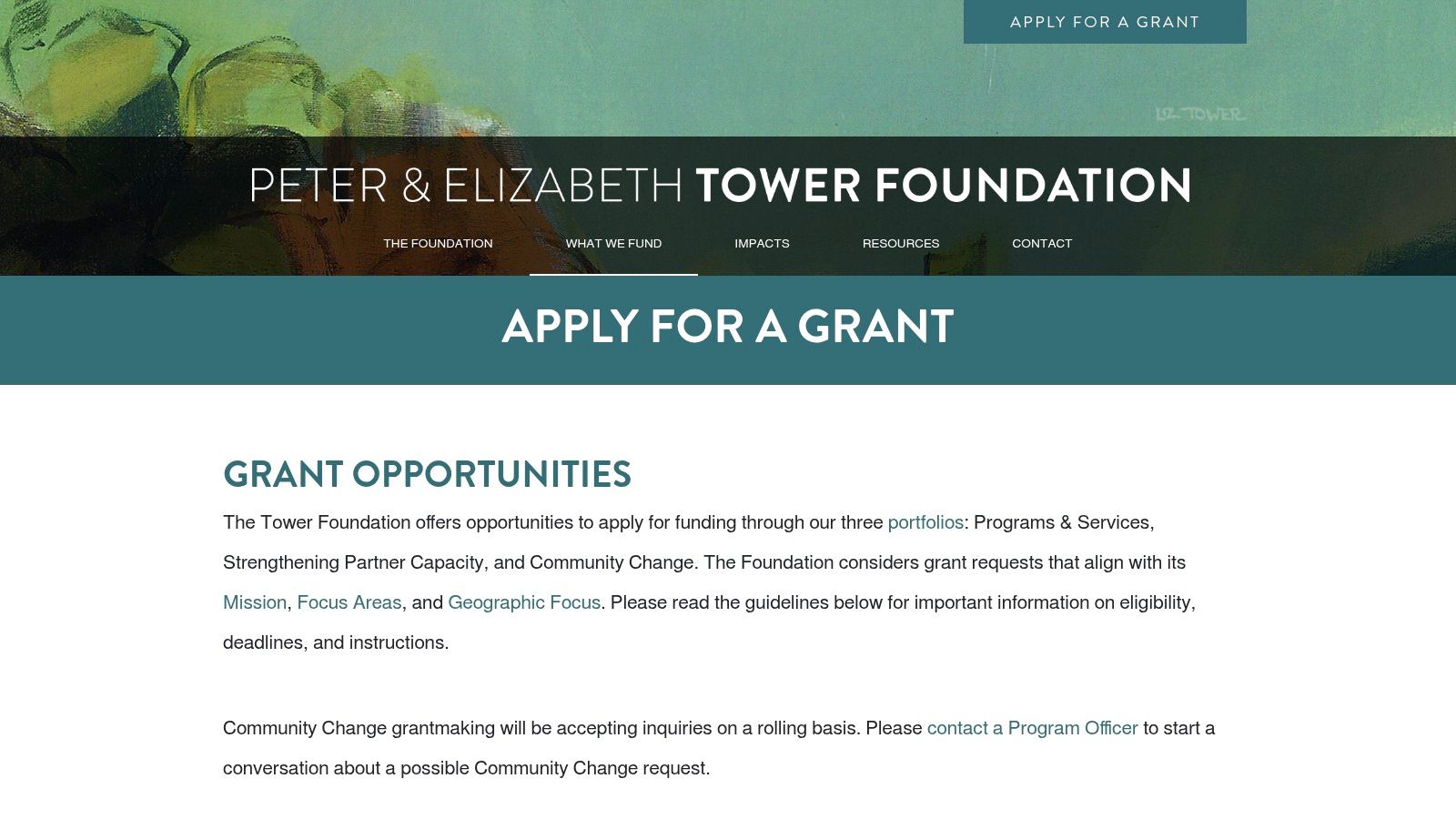
The Tower Foundation has a grant category specifically for short-term general operating support, but mission and geography determine whether it's relevant. Its application page describes the program, publishes application previews and a scoring rubric, and sets out the foundation's focus-area and service-area requirements.
The 2026 program scheduled spring and fall application cycles. The fall deadline was September 25, 2026, and has passed. The foundation says the 2026 program continues the previous year's Federal Crisis Response general operating grants. Organizations that received those crisis-response grants in 2025 aren't eligible for the 2026 short-term program.
Check the rules before preparing
The dedicated operating-support category makes the intended use clearer than a project grant that may or may not allow shared costs. Published previews and scoring criteria can also help a team assess the workload before moving forward. But neither the category name nor a past cycle establishes that another application window is open.
Fit screen: First confirm service-area and focus-area eligibility. Then check the foundation's current program materials for a new cycle and confirm whether any prior crisis-response award affects eligibility. If you're comparing this with other funding types, types of grants can help frame the distinction between operating and project support.
4. Poetry Foundation, General Operating Support
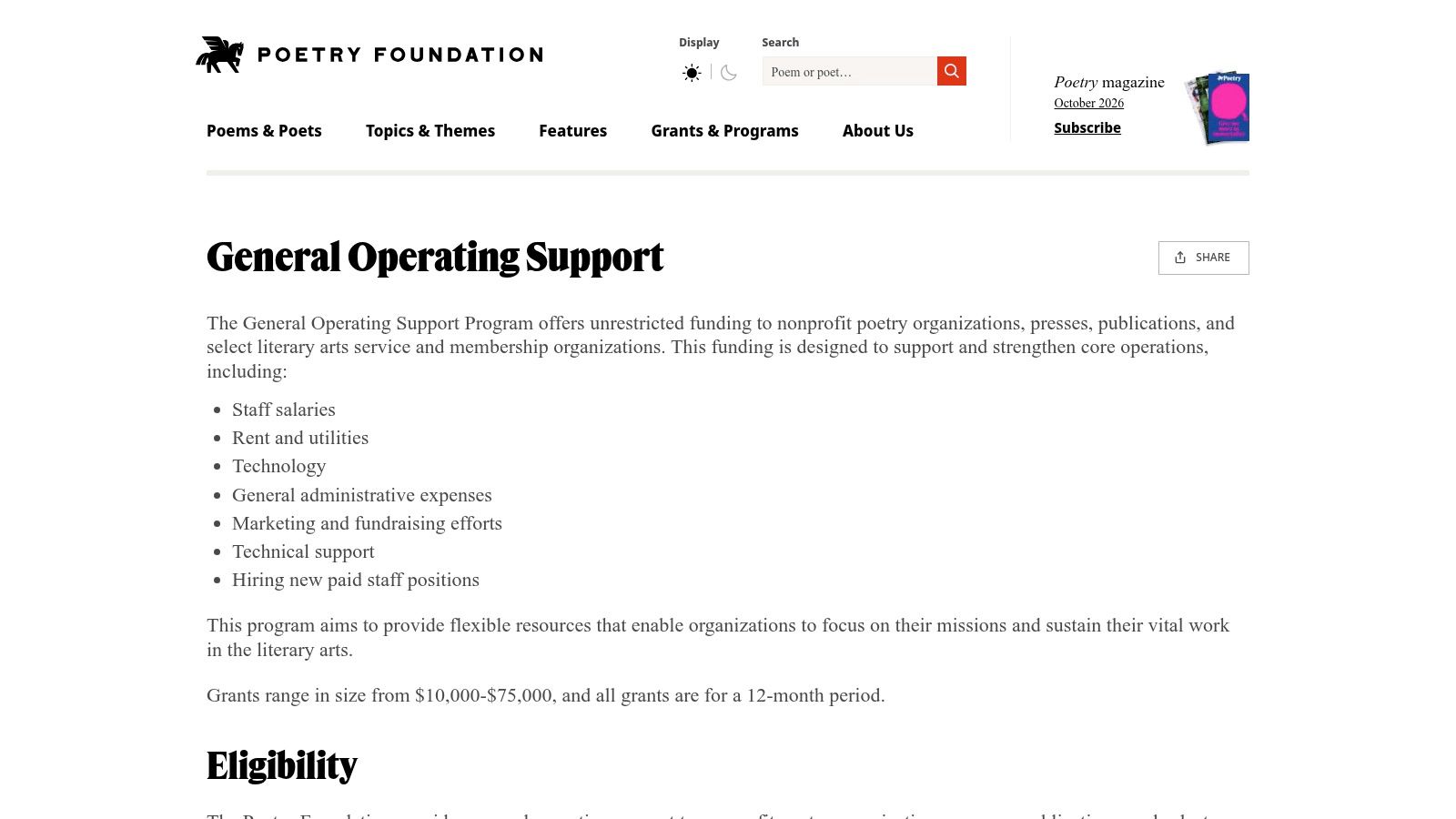
For a poetry-focused organization, press, publication, or qualifying literary-arts service organization, the Poetry Foundation's program is unusually clear about which core costs may be eligible. Its General Operating Support page describes unrestricted grants from $10,000 to $75,000 for 12 months of organizational activity. Eligible costs may include salaries, rent, technology, administration, and fundraising.
A focused national opportunity
Organizations without their own 501(c)(3) status may apply through a fiscal sponsor. The program requires a minimum operating budget of $20,000, and poetry must be central to the organization's work or publication. Schools, universities, primarily literacy-focused organizations, and other listed categories are excluded, so read the eligibility guidance before drafting.
The 2026 application deadline was July 15, 2026, and has passed. The published award range and permitted cost categories still make this worth monitoring for a future cycle if your organization fits the field. Applicants who need an accessible application alternative can ask the foundation about available options.
Don't stretch a general arts or literacy mission into a poetry fit. The program's subject focus is an eligibility screen, not just a way to describe your work.
Fit screen: Confirm that poetry is central, the organization meets the budget requirement, and the applicant type is allowed. Then monitor the program page for its next application window.
5. The Healing Trust, Operating Grant
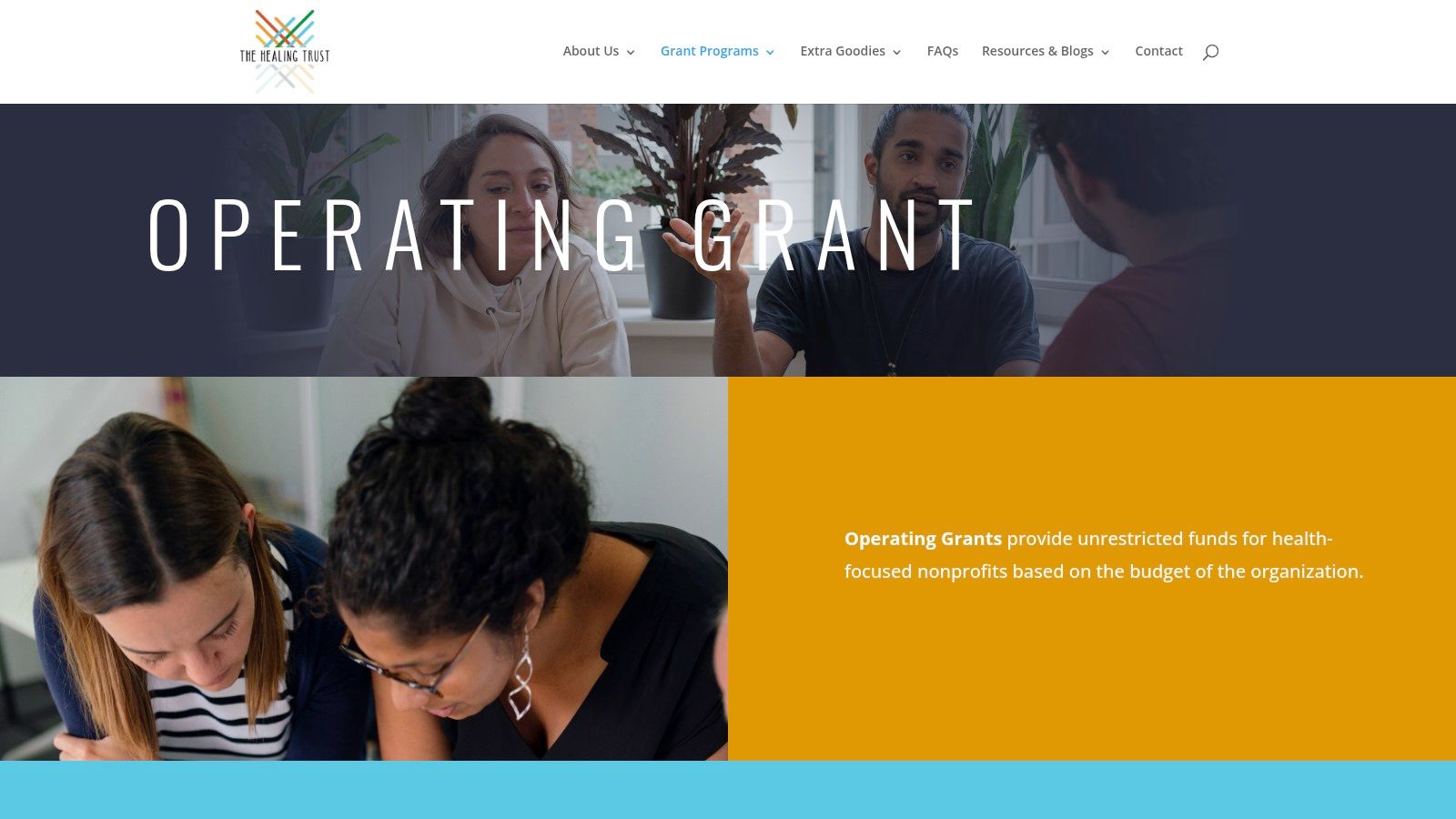
The Healing Trust offers unrestricted operating support to qualifying health-focused nonprofits in its service area. Its Operating Grant page says awards are based on an organization's budget and organizes applications around the Trust's strategic priorities.
That means applicants shouldn't assume the general operating page itself represents an open, broadly available application. Deadlines and eligibility depend on the relevant priority area, and the Trust provides county-level information to help organizations screen their location. Some operating-grant recipients may also receive capacity-building funds, which can complement core support but shouldn't be counted on without confirming eligibility.
A priority-led application
The strongest starting point is to identify which published health priority best reflects your organization's work, then follow that priority's application instructions. This is a better use of staff time than treating the opportunity as a general-purpose grant just because it funds operations.
Fit screen: Verify that your organization is health-focused and serves an eligible area. Check the linked priority page for current deadlines, requirements, and any capacity-building component. The local scope is the main trade-off: a strong mission match won't overcome a geographic mismatch.
6. The Seybert Foundation, Core Grants for General Operating Support
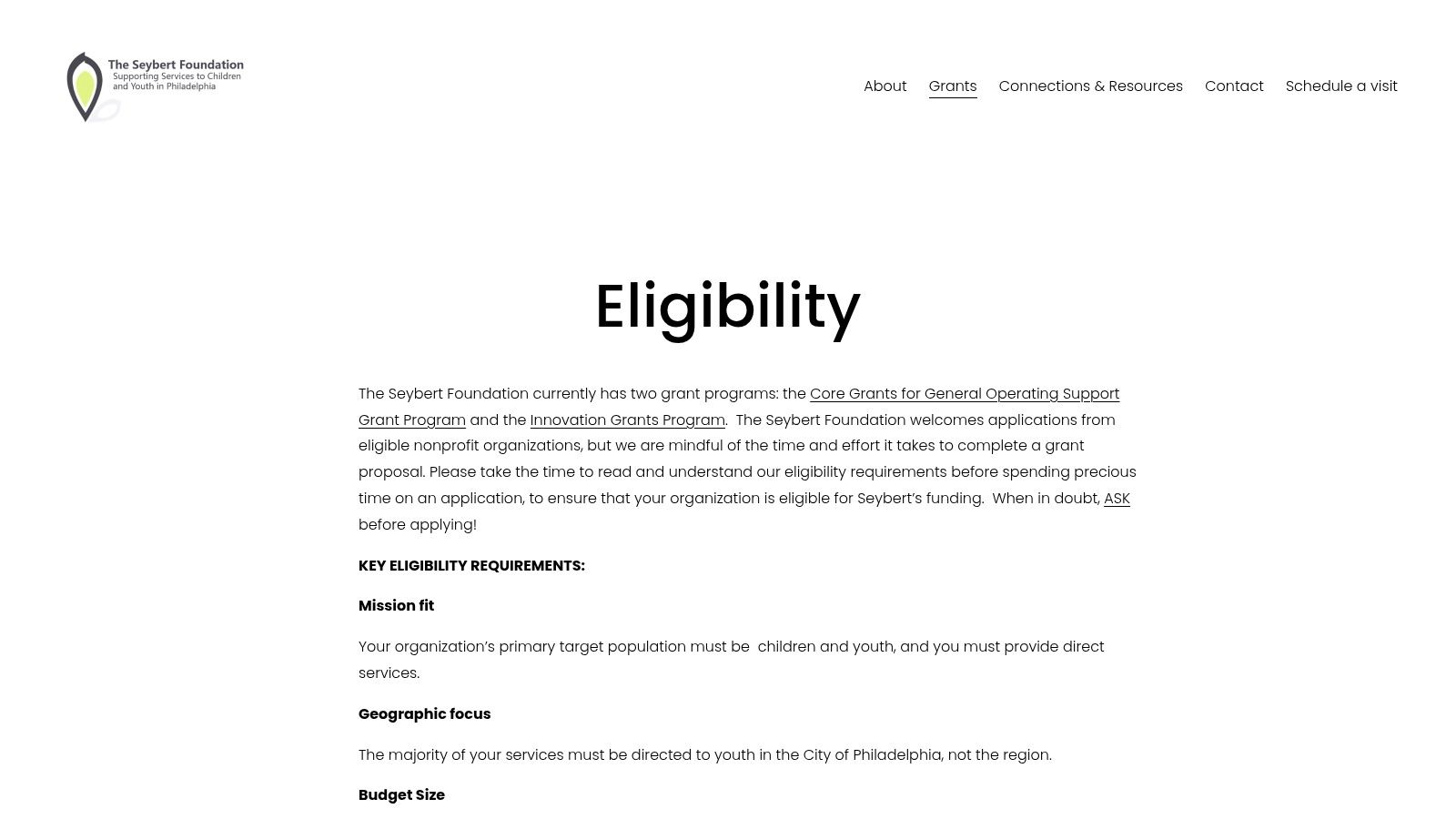
The Seybert Foundation's Core Grants are for organizations providing direct services to disadvantaged children and youth in Philadelphia. The foundation sets concrete eligibility conditions on its eligibility page, making this one to screen early rather than approach based on a broad youth-serving mission alone.
Applicants must primarily serve youth in the city, have an annual operating budget below $1.5 million, and have filed at least one IRS Form 990 as a 501(c)(3). Fiscal-sponsor arrangements may be considered in some cases. The named Core Grants program is intended for general operating support, not a project award with uncertain flexibility.
Direct service matters
Organizations serving young people only indirectly may not qualify, and schools themselves are discouraged from applying for operating support. That distinction matters: a group that trains adults or supports institutions may have a youth-related mission but still fall outside the direct-service fit the foundation describes.
Fit screen: Check the service model, Philadelphia focus, budget ceiling, and filing history before preparing a request. If any condition is unclear, the foundation invites prospective applicants to ask about eligibility. That conversation is more efficient than completing a full application on an uncertain fit.
7. Valley Community Foundation, Core Support
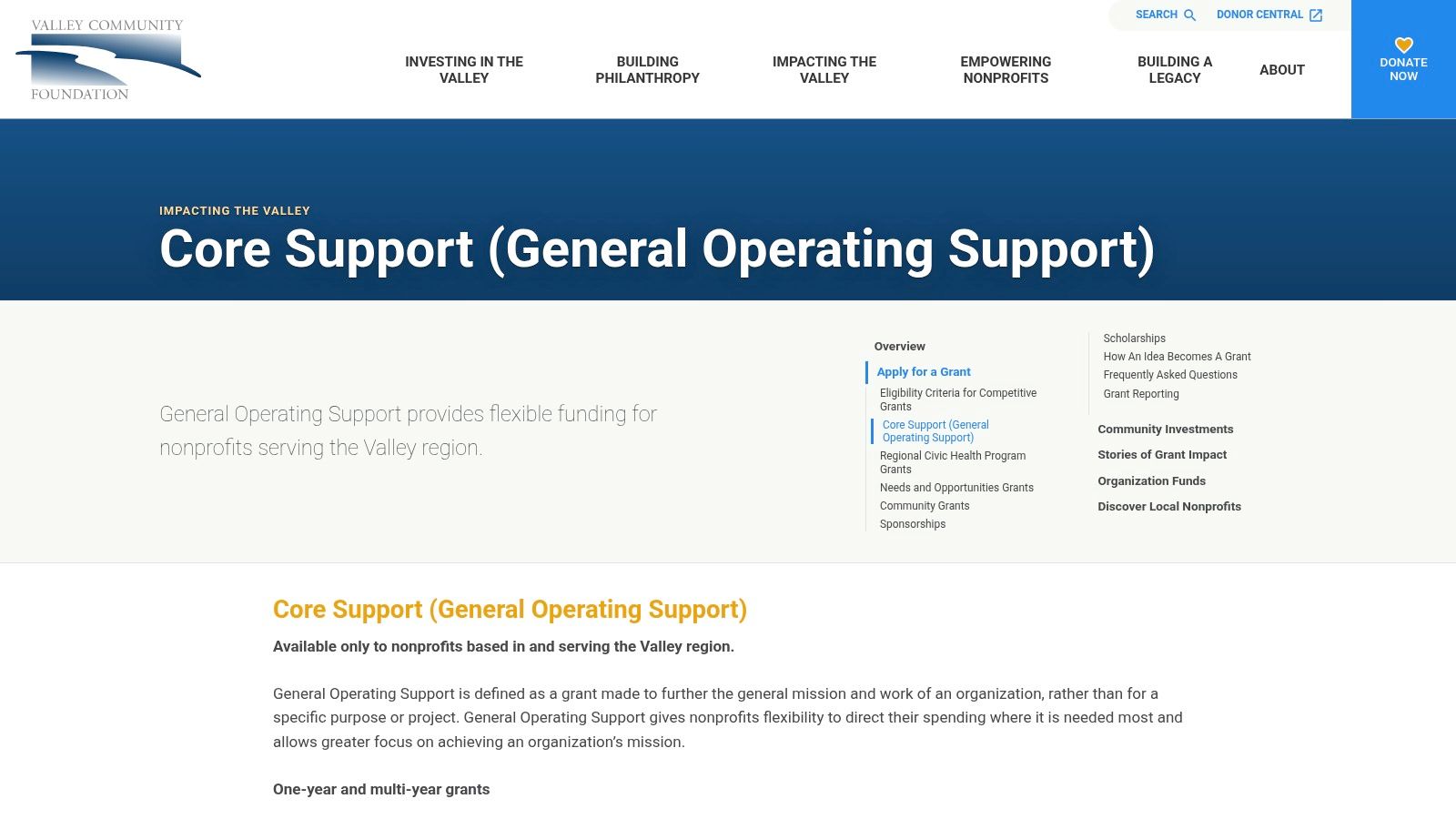
Valley Community Foundation offers flexible support for the general mission and work of eligible nonprofits serving its 20-town region. The responsive grants page describes one-, two-, or three-year grant terms and explains how core support differs from project funding.
The regional boundary is only part of the screen. Published requirements include three years of continuous programming under 501(c)(3) status or fiscal sponsorship, plus an operating budget of at least $250,000. Fiscal-sponsor applicants may qualify if they meet additional requirements. The minimum budget is a meaningful barrier for smaller organizations, even when their work and location align.
Practical rule: Treat the stated operating history and budget requirements as an early go-or-no-go screen. Don't build a full proposal around a regional fit if the organization doesn't meet the funder's baseline conditions.
Fit screen: Confirm that your organization is based in and serves the defined 20-town area, meets the operating-history requirement, and clears the budget threshold. Check current application restrictions and existing grant commitments as well. Multi-year terms can support continuity, but only if your organization qualifies and the award's conditions suit its cash-flow needs.
8. Bonfils-Stanton Foundation, Community Grants
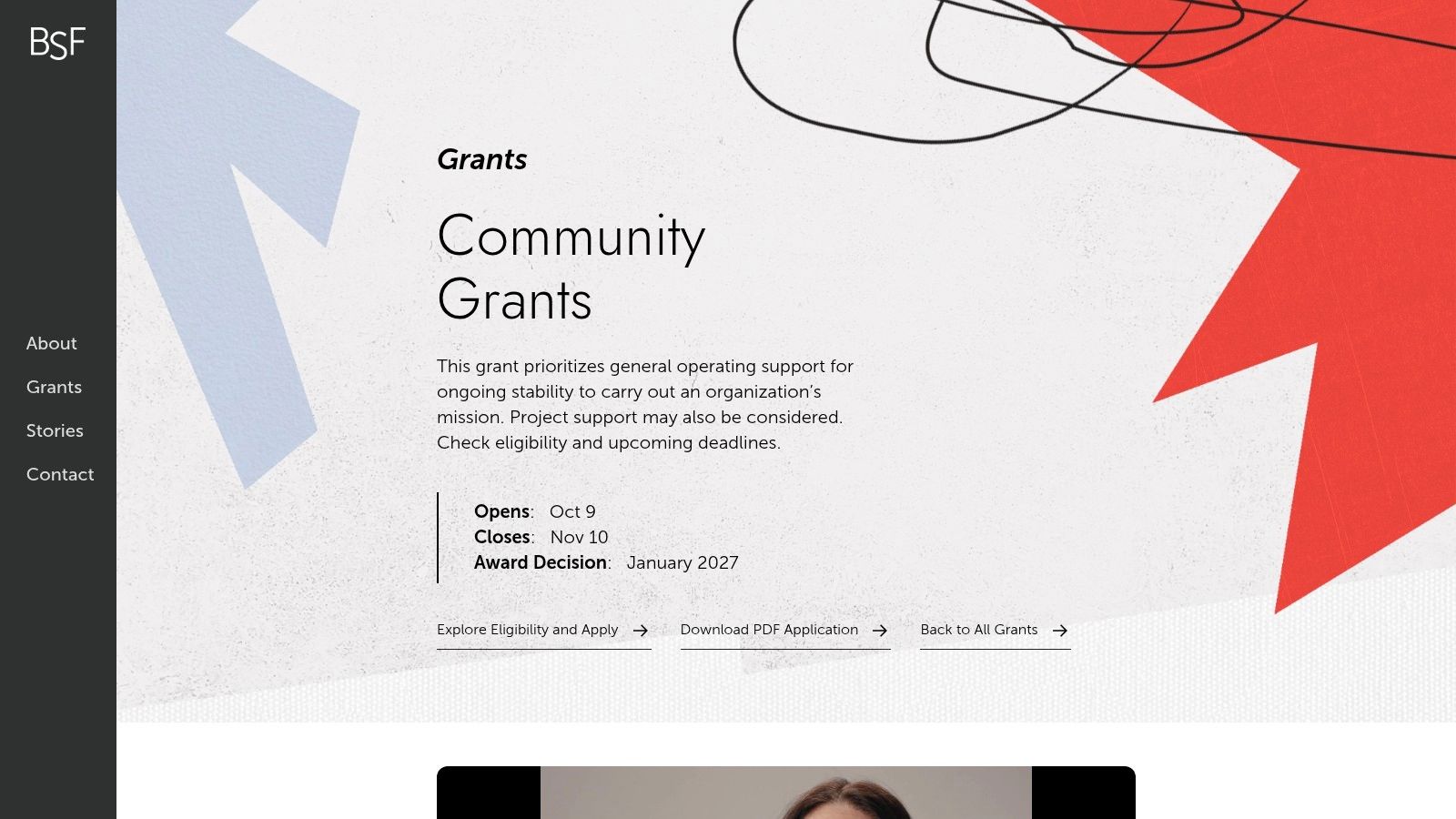
Denver arts and culture organizations seeking flexible support should review the Bonfils-Stanton Foundation's Community Grants. The foundation prioritizes unrestricted operating support while also considering some project funding. Awards are capped at $60,000, and applications are accepted quarterly, according to its quarterly grants page.
The published 2026–27 schedule lists an application window from October 9 to November 10, 2026, with decisions expected in January 2027. New applicants generally begin with an eligibility check and a brief interest form, so allow time for that step rather than treating the proposal window as the only deadline that matters.
Location and public experience are key
The program primarily serves Denver organizations and programs, with an emphasis on arts and culture groups delivering in-person public experiences. A national arts mission or online-only program isn't automatically a fit. The more frequent cycles can help eligible organizations plan a future submission, but quarterly availability doesn't erase the geographic and program requirements.
Fit screen: Confirm Denver eligibility and the public-facing, in-person nature of the work. New applicants should complete the eligibility process early, then verify the current cycle dates and requirements before assembling a request. The award cap is a ceiling, not an indication that each organization should request the maximum.
9. California Arts Council, General Operating Support
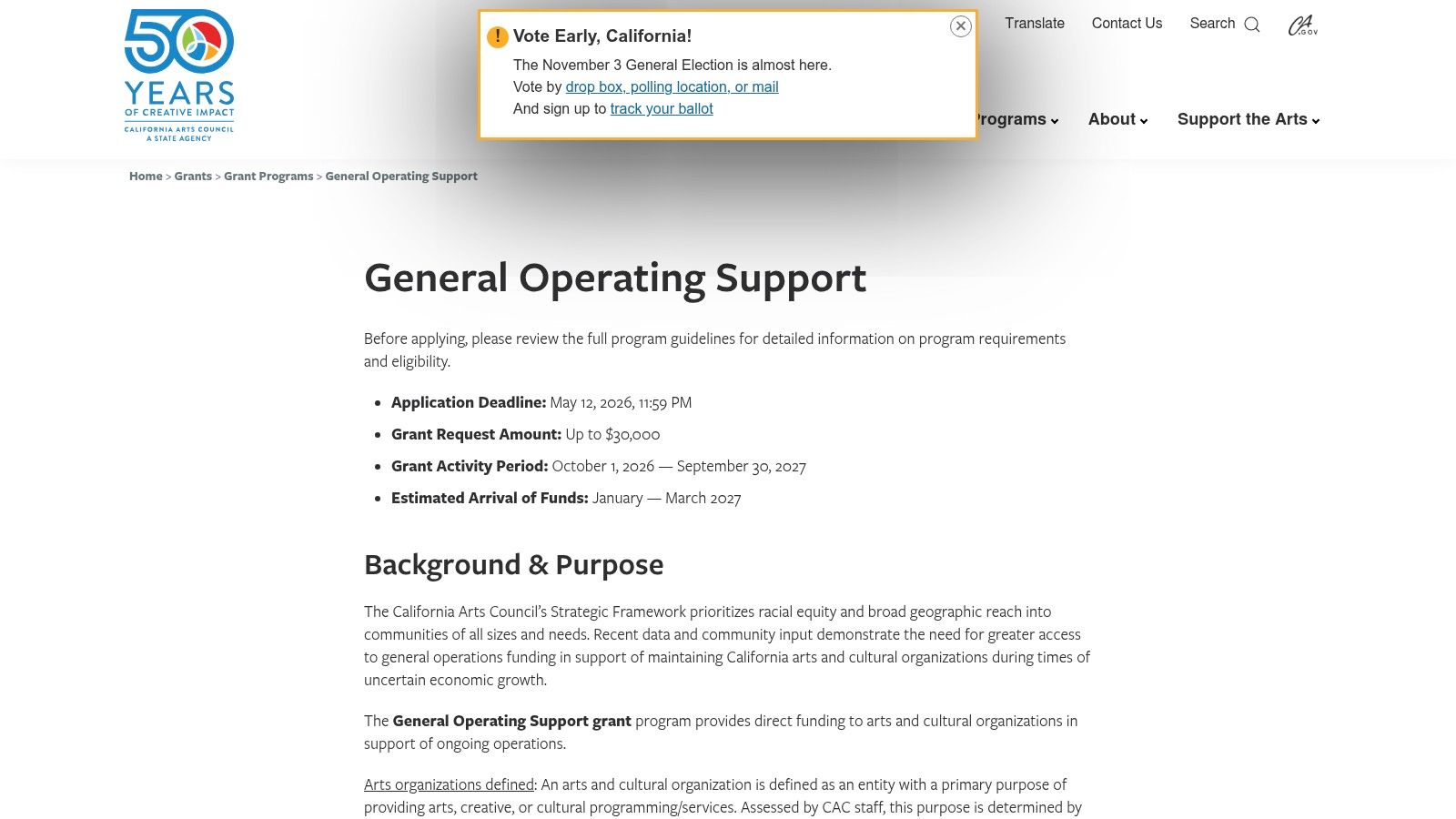
The California Arts Council's General Operating Support program funds ongoing operations for qualifying arts and cultural organizations in the state. For the 2026 cycle, the request limit was up to $30,000. The deadline was May 12, 2026, so that application cycle is closed, as noted in the program guidelines.
Check the full eligibility rules
The program includes some nonprofit and fiscally sponsored applicants, subject to organizational, revenue, and other rules. Certain applicants may also face revenue caps or matching requirements. Those conditions can substantially narrow the pool of eligible organizations, so check the full guidelines rather than relying on the program title or a short summary.
The California Arts Council publishes detailed guidance and a grantee database. Reviewing prior grantee records can help teams understand the kinds of organizations that have received support, but it doesn't guarantee that a similar applicant will be funded. This is a program to monitor for the next cycle if your organization meets the state, arts, and financial requirements.
Fit screen: Verify that your organization is eligible under the current guidelines, including any revenue and matching rules. Because the 2026 deadline has passed, use this cycle to prepare for future updates rather than submitting late. For a broader overview of possible funding channels, see nonprofit funding sources.
10. Maryland State Arts Council, Grants for Organizations
Maryland State Arts Council's Grants for Organizations program provides general operating support to qualifying organizations and programs producing or presenting ongoing public arts programming. The statewide program lists a November 15, 2026 application deadline for FY 2028 on its current grantee and program page.
The deadline to submit an Intent to Apply form is an earlier gate for new applicants and organizations that didn't receive a grant in the latest funding cycle. That form is due September 15, and applicants must have eligibility confirmed before proceeding. As of October 23, 2026, that preliminary deadline has passed, so new and non-recent applicants should contact the council to confirm whether they can participate in the current cycle.
Confirm the application path first
Organizations must meet the program's eligibility requirements and offer ongoing arts programming open to the public. The published application deadline doesn't mean every interested organization can still enter the process; the Intent to Apply step may already have closed the door for some applicants.
Fit screen: Established, eligible applicants should verify current instructions and prepare for the listed deadline. New applicants and organizations without a recent award should confirm their status directly with MSAC before spending time on a full application. This is a stronger prospect for teams that can document regular public programming and have already completed the preliminary eligibility process.
Top 10 Operating Grants for Nonprofits: Comparison
| Option | Type and support | Eligibility and reach | Price or award | Timing and access | Standout value |
|---|---|---|---|---|---|
| Grantlas (recommended) | Grant discovery platform for foundations and government opportunities | Nonprofits nationwide; filters for sector, location, and grant size | Solo: $99/month; Pro: $199/month | 7-day trial; profile and initial matches before payment details | Scored matches with plain-English reasons, eligibility flags, funder history, and deadline alerts |
| Cummings Foundation, $35 Million Grant Program | Multi-year, generally unrestricted operating support | Nonprofits serving designated Greater Boston communities | $10,000–$100,000 annually; 3-year awards, some 10-year | 2027 LOI expected to open mid-July 2027 | Large-scale local program with flexible operating support |
| The Tower Foundation, Short-Term General Operating Grants | Short-term operating support | Organizations meeting its mission, focus-area, and geographic rules | Not specified | 2026 fall deadline passed; prior 2025 crisis-response recipients are ineligible | Published application previews and scoring rubric |
| Poetry Foundation, General Operating Support | Unrestricted support for 12 months of organizational activity | Qualifying U.S. poetry organizations, presses, publications, and some literary groups | $10,000–$75,000 | 2026 deadline passed; monitor for next cycle | Covers core costs; fiscal sponsors may apply |
| The Healing Trust, Operating Grant | Unrestricted operating support; possible capacity-building funds | Health-focused nonprofits in its defined service area | Based on organizational budget | Deadlines and details vary by strategic priority | Local eligibility information and priority areas are published |
| Seybert Foundation, Core Grants | General operating support for direct services to children and youth | Organizations primarily serving disadvantaged youth in Philadelphia; budget below $1.5M | Not specified | Check with foundation about eligibility and application details | Clear screening criteria; fiscal sponsors may be considered |
| Valley Community Foundation, Core Support | Flexible support for an organization's mission and work | Nonprofits serving its 20-town region; generally $250,000+ budget and 3 years of programming | One-, two-, or three-year grants | Check current cycle and restrictions | Multi-year support and clear eligibility criteria |
| Bonfils-Stanton Foundation, Community Grants | Primarily unrestricted operating support for arts and culture | Denver-focused organizations offering in-person public experiences | Up to $60,000 | Application window: Oct. 9–Nov. 10, 2026; new applicants generally start with an eligibility check | Quarterly cycles and operating support priority |
| California Arts Council, General Operating Support | General operating support for arts and cultural organizations | Eligible California organizations, subject to program rules | Up to $30,000 for 2026 cycle | 2026 deadline passed | Public grantee database and detailed guidelines |
| Maryland State Arts Council, Grants for Organizations | General operating support for ongoing public arts programming | Eligible Maryland organizations and programs | Not specified | FY 2028 deadline: Nov. 15, 2026; some applicants needed to submit an intent form by Sept. 15 | Statewide program with published grantee information |
Build Your Prioritized Operating Grant Shortlist
A long prospect list is not a funding plan. Rank each opportunity by mission and geographic fit, eligible operating costs, deadline status, and application effort. Put grants with a clear fit and an active window near the top. Keep strong prospects with closed cycles in a monitoring queue, and remove opportunities that fail a basic eligibility screen.
Start by separating unrestricted support from project funding. A funder may support your issue area but restrict awards to a defined program, leaving salaries, technology, administration, or other shared costs uncovered. In the Nonprofit Finance Fund's 2025 survey, 64% of respondents said less than half of their 2024 grants and donations were unrestricted, while 75% reported that raising unrestricted funds was a challenge and 46% called it a major challenge (NFF's survey report). That's why “supports nonprofits in our sector” isn't enough evidence. Look for actual operating awards, clear eligibility language, and terms that match your cash needs.
Next, assess the full cost of pursuing and managing the grant. A flexible award can still demand substantial application, reporting, or compliance work, and it may not cover the staff time required to meet those obligations. A 2025 California Little Hoover Commission survey found that 65% of nonprofit respondents considered grant reporting requirements overly burdensome or complex, and nearly 60% said they didn't receive enough funding to cover indirect costs such as rent and utilities (commission survey materials). Before applying, check whether shared costs are allowed, how payments are scheduled, and what reporting the funder requires.
Then sequence outreach by urgency and readiness:
- Open and eligible: Confirm the requirements, assign an owner, and work backward from the deadline.
- Upcoming or recurring: Gather organizational documents and budget details before the application opens.
- Closed but promising: Save the opportunity, note its last known cycle, and schedule a date to recheck the funder's site.
- Unclear fit: Ask the grantmaker a targeted eligibility question before starting a proposal.
Grantlas can support this workflow by generating a profile-based prospect list, surfacing fit reasons and potential eligibility flags, and organizing saved searches, reminders, and follow-up in a pipeline. Still verify current rules directly with each funder. A prospect score can help decide what to investigate first, but it can't replace the grantmaker's guidelines or your team's judgment.
Finally, distinguish unrestricted operating support, multiyear support, and project awards that allow shared costs in your tracking system. They solve different problems and have different levels of flexibility. A smaller, genuinely usable grant may be a better operational fit than a larger restricted award that leaves core expenses unfunded. For help evaluating grant proposal tools from GPT Workspace, compare them against your actual workflow, including prospect research, drafting, review, and reporting.
Grantlas helps nonprofits identify prospective funders and open opportunities, then rank matches against an organization profile with plain-English fit reasons and eligibility flags. If you're building a focused pipeline for operating support, visit Grantlas to review matches, track deadlines, and prioritize the prospects worth pursuing.