10 Nonprofit Grants for Technology: 2026 Guide
Oct 21, 2026 · 13 min read

Only 20% of funders provide nonprofits with money for technology tools and resources, down from 23% in 2022, according to the 2024 State of Philanthropy Tech Survey findings summarized by NTEN. That's the core problem with nonprofit grants for technology. Demand is broad, dedicated supply is narrow, and many awards aren't cash at all.
Treat fit as your first filter. Some programs below provide unrestricted cash, others donate hardware, advertising credit, or cloud project support, and several move to a full application only by invitation. A regional award you can win beats a national program that excludes your geography, budget size, or use case.
Use this list by job to be done, not by brand name. Match your mission, service area, implementation capacity, and cost type before you spend hours on a proposal. If you need laptops, don't chase an AI pilot fund. If you need recurring software and training, don't build your plan around donated equipment.
Table of Contents
- 1. AWS Imagine Grant
- 2. Cisco Global Impact Cash Grant
- 3. Cisco Technology Grant Program
- 4. OpenAI Foundation People-First AI Fund
- 5. Argenta Foundation Technology Grant
- 6. Microsoft Community-First Grants
- 7. Seattle Technology Matching Fund
- 8. Community Foundation of Mendocino County Community Enrichment Grants
- 9. Google Ad Grants
- 10. Twilio.org Impact Fund
- Top 10 Nonprofit Technology Grants Compared
- Build a Technology Funding Pipeline, Not a One-Off Search
1. AWS Imagine Grant
Pick the AWS Imagine Grant program when cloud technology is central to a mission-serving pilot, proof of concept, or existing program. It's the wrong choice for routine office equipment replacement. Your project should show how cloud infrastructure improves data use, service delivery, or reach.
Where It Fits Best
- Project stage: Categories address different stages of technology adoption, including an AI-focused Pathfinder Award.
- Use cases: Cloud-based data systems, service platforms, and AI projects with a defined beneficiary outcome.
- Cost to apply: There's no fee to apply, and AWS publishes past grantee examples you can study.
- Planning next step: Review category fit alongside guidance on a technology grant for nonprofit organizations before drafting.
You must have active U.S. 501(c) status. The 2026 cycle is closed, the second round is by invitation, and awards and requirements vary by category and cycle. Don't build a current-quarter budget around it. Use the closed period to document your architecture, security controls, staffing, and measurable outcomes, then check the official page for future rounds. If you're also evaluating implementation partners, you can browse on AWS to understand the ecosystem around a proposed build.
2. Cisco Global Impact Cash Grant
Choose the Cisco Global Impact Cash Grant if you need cash, not donated products, for a technology-enabled program serving underserved communities. Cisco prioritizes crisis response, education, economic opportunity, and climate resilience. Your technology has to improve reach or efficiency for a significant social problem, not just modernize internal operations.
U.S. organizations can submit a letter of inquiry year-round. That's a practical advantage over a single annual deadline, but don't mistake the letter for an application. It's an initial screening, and full applications are by invitation only.
First-time recipients may request up to $100,000, per the program terms in this brief. Budget the full delivery model, including implementation, accessibility, staff time, and evaluation, rather than pricing only the platform. U.S. applicants generally must be 501(c)(3) public charities, and your program must meet Cisco's population and sector requirements.
Apply when you can name the underserved population, the service bottleneck, and the result technology will change. Skip it if your strongest case is that your staff computers are old. Cisco is funding community impact powered by technology, and your letter needs to make that connection in the first paragraphs.
3. Cisco Technology Grant Program
Go to the Cisco Technology Grant Program when donated hardware, software, and services solve your problem better than cash. It's built to strengthen nonprofit technology infrastructure in climate resilience, crisis response, economic opportunity, and education.
That in-kind structure creates a clear trade-off. Donated Cisco technology may help with network and communications needs, productivity, security, or scaling. It won't pay general operating costs, and it may not fit unrelated purchases from other vendors. Read the program guide before you design the request, because eligibility and application steps are governed there.
Practical rule: Price the donated technology and the work to run it as separate lines. A free system you can't configure, secure, or train staff to use isn't free.
That warning matters because more than 54% of nonprofit technology budgets go to hardware and equipment, while training receives roughly 1%, according to NTEN's 2024 Nonprofit Digital Investments Report. Build configuration, migration, user support, and maintenance into your implementation plan from another funding source if Cisco's donation doesn't cover them.
4. OpenAI Foundation People-First AI Fund
The OpenAI Foundation People-First AI Fund is a watchlist opportunity, not an open application you can submit today. Its 2026 round awarded $50 million to 163 organizations working in community services, arts and culture, and local journalism. Awards were unrestricted and grantees weren't required to use a particular AI product.
That unrestricted, product-agnostic structure is exactly what makes it valuable. You could fund learning, piloting, staff capacity, and safeguards instead of forcing every dollar into a vendor purchase. That flexibility is rare. In a 2025 survey, nearly 90% of foundation leaders reported their foundations offered neither financial nor nonfinancial AI implementation support, as reported in the Center for Effective Philanthropy AI study.
The 2026 application deadline was July 15, grantees have been announced, and future funding isn't guaranteed. Don't pause other fundraising while waiting for another round.
Use the time to get ready. Define the community problem, identify sensitive data, set human review, and document bias, privacy, and cybersecurity controls. If a future round opens, you'll have a readiness case, not just enthusiasm for AI.
5. Argenta Foundation Technology Grant
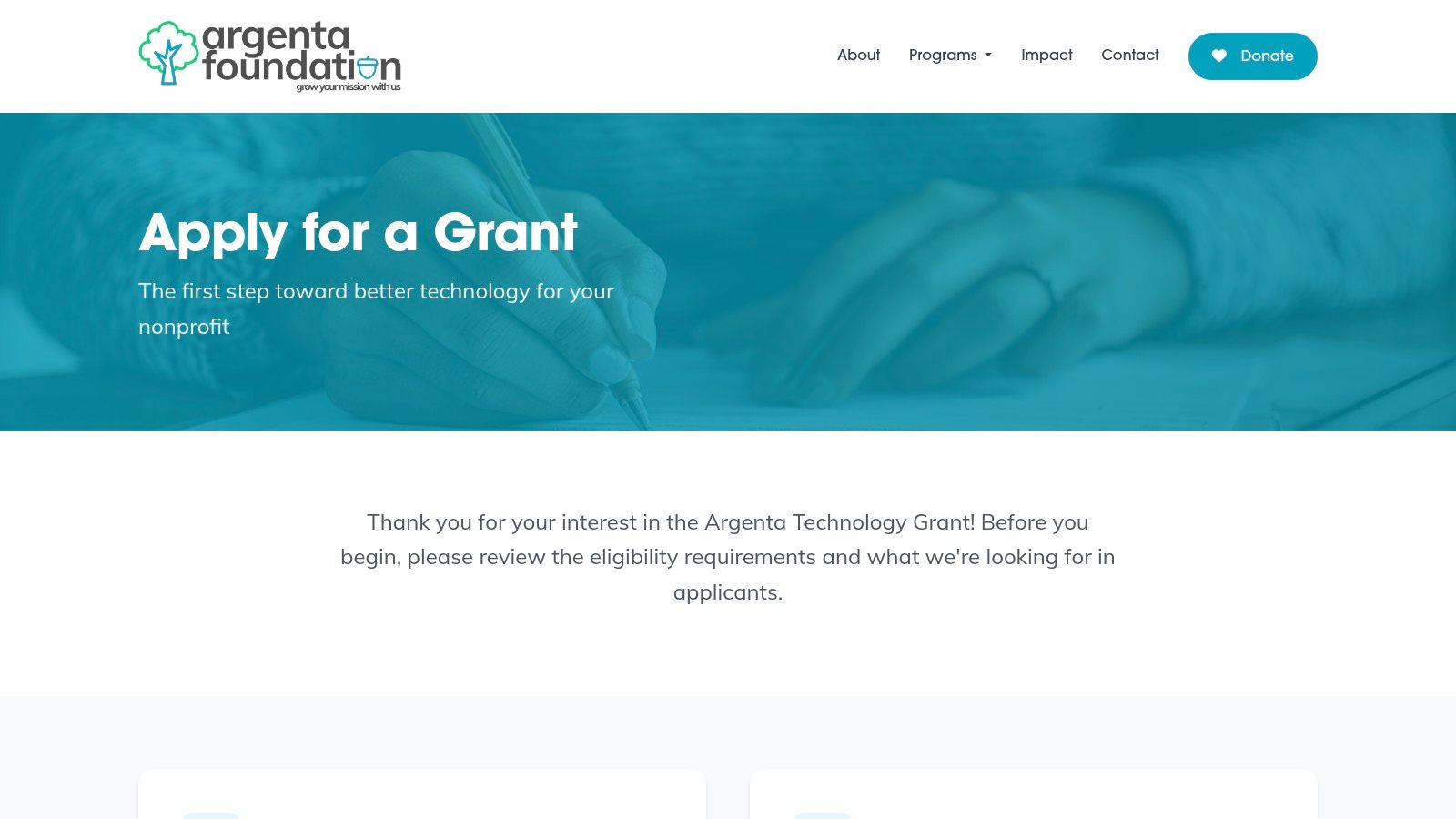
Start with the Argenta Foundation application page if you're a small to mid-sized nonprofit with a named technology gap. This is a technology-capacity grant, so you don't have to disguise infrastructure as something else. You do have to show readiness to implement it.
Eligibility Screen
- Tax status: You need 501(c)(3) status and active programs.
- Budget range: Your annual budget must be between $100,000 and $2 million, per the published criteria.
- Need: You must identify a specific technology need tied to mission delivery.
- Confirmation required: Verify the award amount and current cycle dates directly with the foundation.
The budget limits exclude many very small and large organizations. Check that screen first. Readiness is the next screen, and it's where weaker applications fail. A 2025 survey found 64% of nonprofit leaders cited insufficient in-house expertise as a barrier, summarized in Ohio Society of CPAs coverage of the nonprofit technology survey.
Name your internal owner, implementation partner, training plan, and renewal costs. That turns a wish list into a capacity proposal.
6. Microsoft Community-First Grants
Apply to Microsoft Community-First Grants only if you're an eligible 501(c)(3) public charity operating in King County, Washington. Geography decides this one immediately. It's a regional community grant, not a nationwide technology-only fund.
The 2026 round offered $20,000 for a project serving King County. Technology can be part of a qualifying project when it's integral to responding to an immediate community need. That distinction should shape your proposal. Lead with the community outcome, then show why the software, equipment, or digital service is necessary to deliver it.
A strong fit might be a local project where a booking system, communications tool, or data process removes a barrier residents face right now. A weak fit is a general request to upgrade staff technology with no direct project connection. Microsoft won't treat this as a general-purpose IT grant, and neither should you.
The 2026 application window was scheduled to close October 23, 2026. Check the official page for current eligibility and future dates before you allocate staff time. If you're outside King County, remove it from your pipeline and redirect that effort to a community foundation in your own service area.
7. Seattle Technology Matching Fund
The Seattle Technology Matching Fund is for digital equity in Seattle, not for your internal IT refresh. Fund community-driven projects that improve residents' access to technology and the opportunities it provides. If residents aren't the direct beneficiaries, you're in the wrong program.
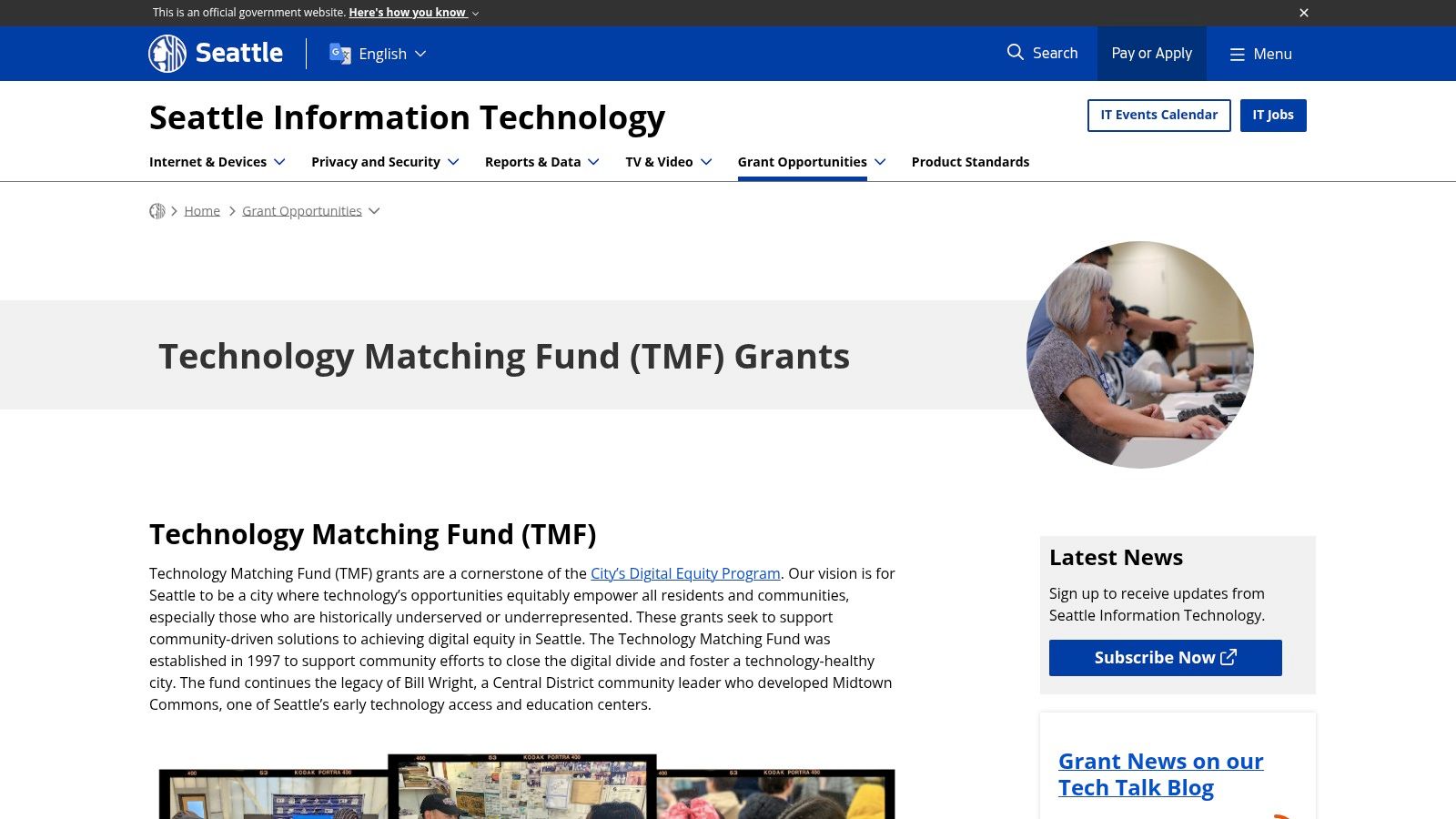
The 2026 guidelines allowed requests up to $45,000. Use that ceiling to scope a focused community project rather than padding a larger internal systems plan. Show who lacks access, what barrier you'll remove, where the work happens, and how residents will use the technology after launch.
- Best fit: Access-oriented, community-driven digital equity work in Seattle.
- Poor fit: General nonprofit IT upgrades with no resident access outcome.
- Research habit: Compare local public opportunities alongside private funders using consistent grant research tools so you don't miss city cycles.
Check current cycle requirements before applying. Local government guidelines can change, and matching expectations, eligible applicants, and reporting rules need confirmation. For Seattle organizations, this is one of the clearest use-case matches on the list. For everyone else, it's a model to look for in your own city.
8. Community Foundation of Mendocino County Community Enrichment Grants
Pick the Community Foundation of Mendocino County Community Enrichment Grant Program when you need a specific, budgeted technology purchase inside its service area. Unlike funders that treat technology as overhead, this program explicitly accepts proposals for equipment and technology.
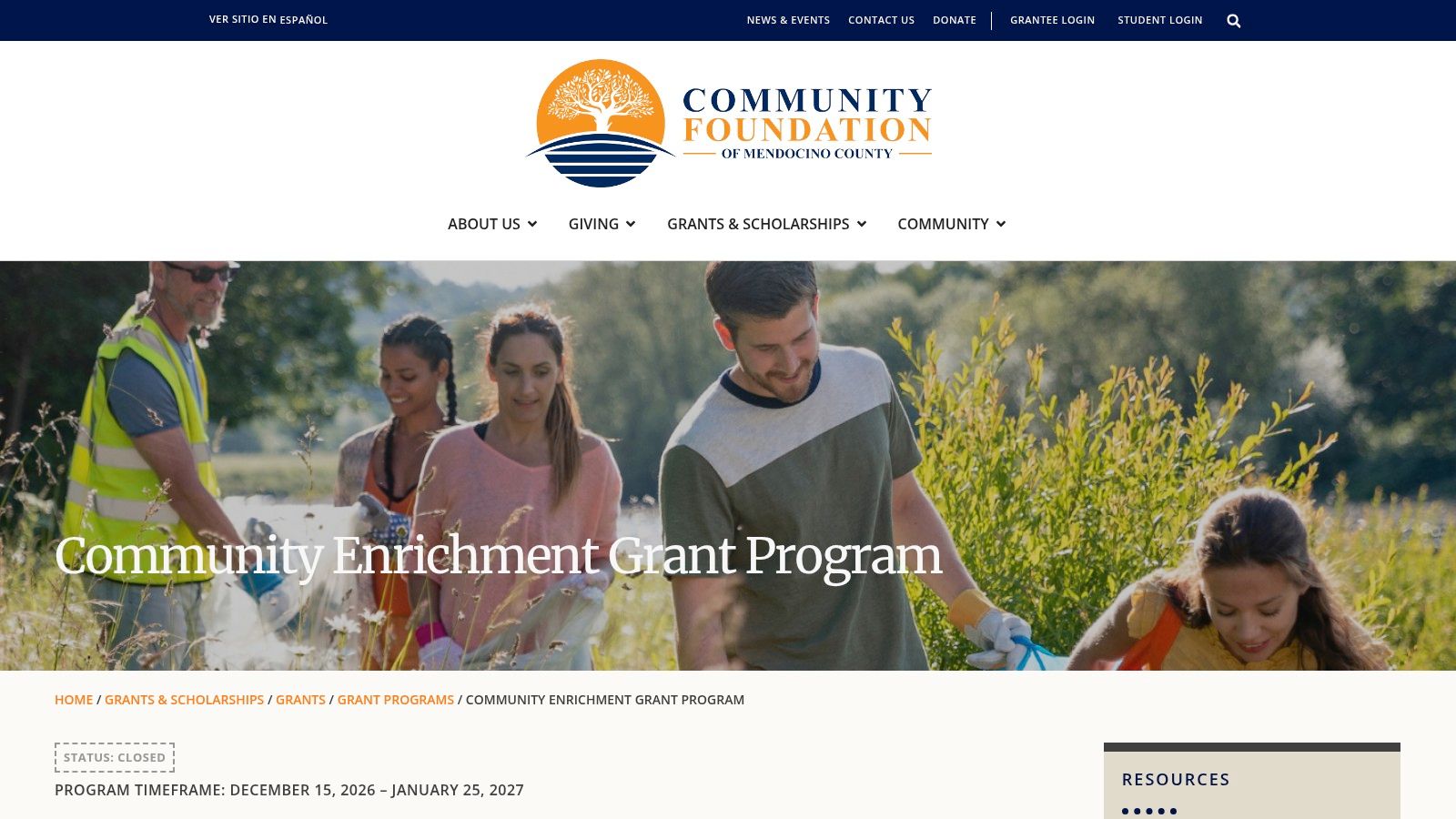
Eligible costs can include software, apps, and website development. That makes it useful for a defined project with product specifications and cost estimates. Don't submit a vague request for digital transformation. Name the product, explain the mission link, and show what changes for the people you serve.
A community foundation reviewer should be able to see the purchase, the price, and the community benefit without hunting through your narrative.
You must provide a clear project rationale tied to your mission, plus specifications and estimates. Grant amounts and deadlines depend on current guidelines, so confirm them before you write. The service-area limit is the hard constraint.
This is the model many nonprofits should replicate locally. Community foundations often accept technology when it's presented as a costed project asset, even when they don't run a grant labeled for technology.
9. Google Ad Grants
Use Google Ad Grants to grow reach, not to fund technology infrastructure. Qualifying nonprofits can receive up to $10,000 per month in in-kind Google Search advertising. It's advertising credit. You can't spend it on hardware, staffing, or software.
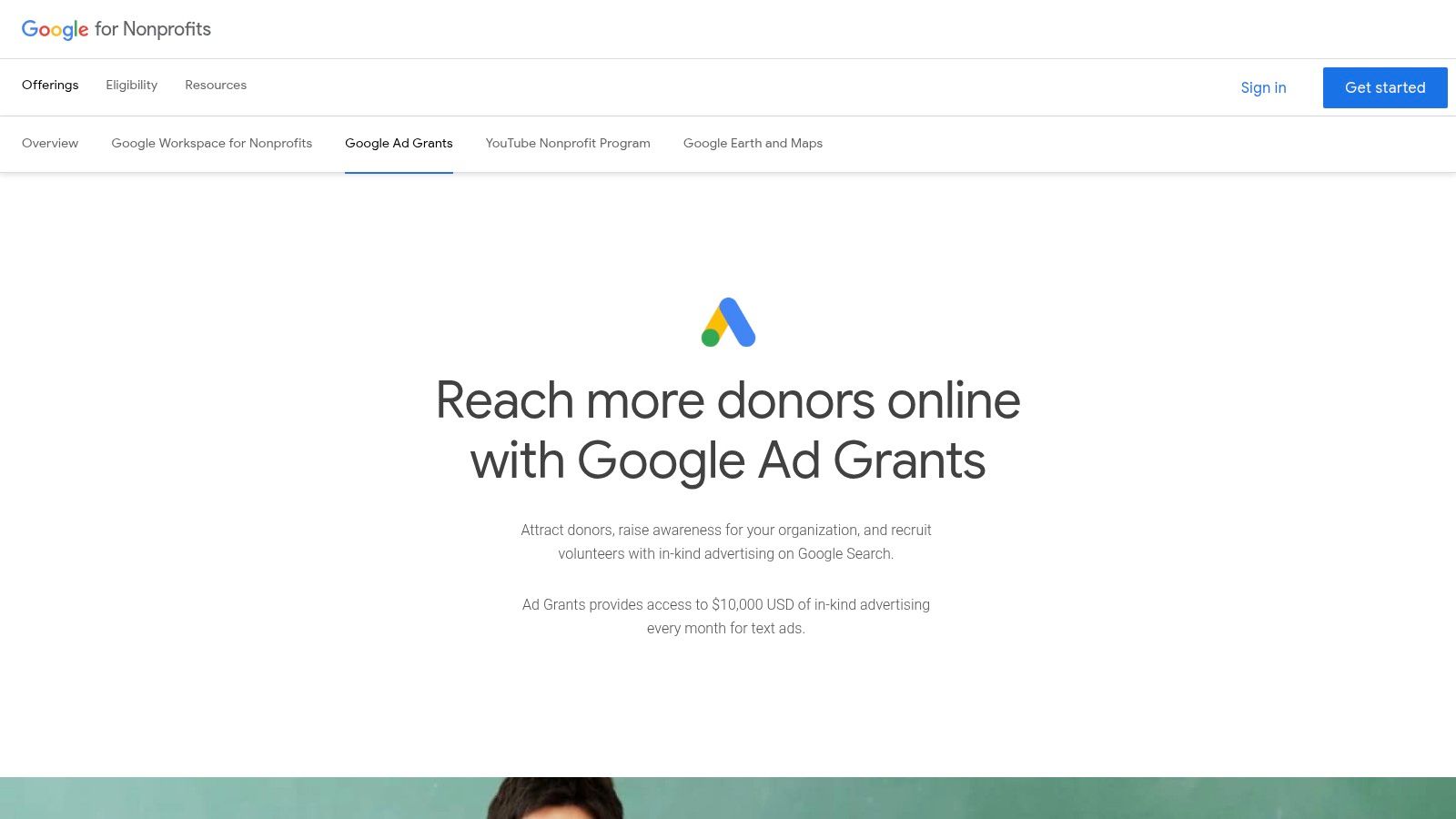
Campaigns can target selected locations and support awareness, fundraising, and volunteer recruitment. The monthly limit doesn't guarantee traffic or value. You still need a suitable website, clear landing pages, conversion tracking, and staff or volunteer capacity to manage campaigns within ongoing program policies.
That capacity point separates adoption from results. NTEN's donor management research found 94% of surveyed nonprofits use a donor-management system, yet the average likelihood of recommending it was only 6.9 out of 10, according to NTEN's 2024 Donor Management Systems study. Connect your ads to systems your team can use, and review your broader funder pipeline with foundation research tools.
Apply if donor, volunteer, or service-user acquisition is a current bottleneck. Wait if your website can't convert visitors.
10. Twilio.org Impact Fund
Consider the Twilio.org Impact Fund if you're building a communications-enabled service, not replacing routine subscriptions. The fund provides grants and investments to nonprofits and social-impact organizations working on digital transformation and communications technology.
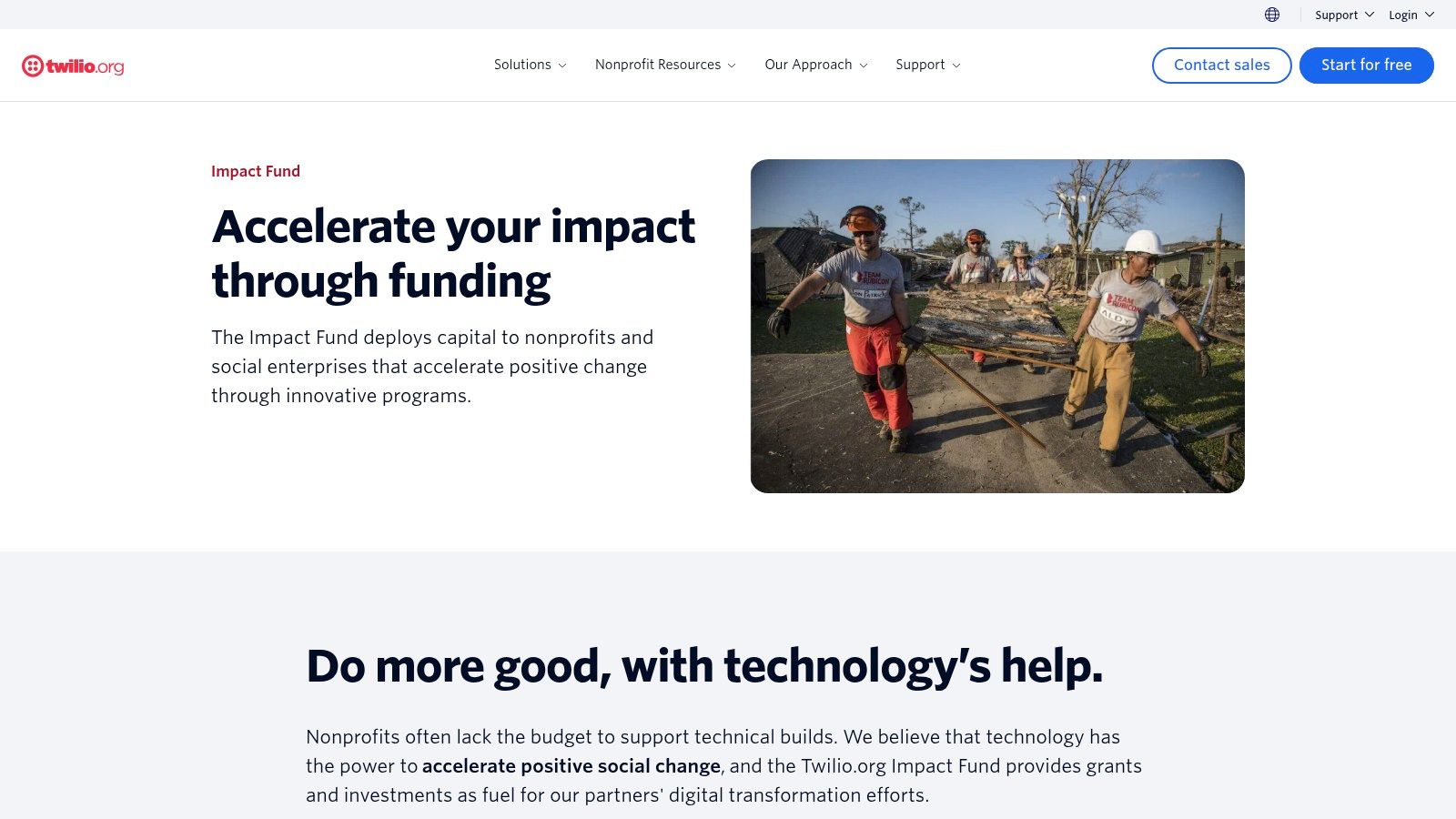
Its stated focus includes displaced communities, climate action, and long-term well-being. Mission alignment comes first. Technology alignment comes second. A strong prospect can explain why messaging, voice, or another communications channel is essential to reaching people, coordinating help, or sustaining support over time.
Before You Express Interest
- Build, don't buy: Frame a technical build with users, workflows, and safeguards.
- No standard award: The page doesn't provide a standard award amount, so don't anchor your budget to an assumed grant size.
- Selective route: The page invites expressions of interest for future rounds rather than presenting a universally open application.
That selectivity is the trade-off. You gain a funder that explicitly connects technology with social impact, but you don't get a predictable open call. Submit a concise interest case only when your program already fits the focus areas. Don't retrofit a general equipment request into a communications story.
Top 10 Nonprofit Technology Grants Compared
| Grant Opportunity | Funding or Support | Best Fit | Eligibility and Geography | Availability and Key Notes |
|---|---|---|---|---|
| AWS Imagine Grant | Funding for cloud-technology projects; amount varies by category | Nonprofits piloting or expanding mission-focused cloud, data, or AI projects | U.S. nonprofits with active 501(c) status | 2026 cycle closed; second round is by invitation; no application fee |
| Cisco Global Impact Cash Grant | Cash grants; first-time recipients may request up to $100,000 | Technology-enabled programs addressing social challenges | U.S. 501(c)(3) public charities meeting Cisco's population and sector criteria | Letters of inquiry accepted year-round; full applications by invitation |
| Cisco Technology Grant Program | Donated eligible hardware, software, and services | Nonprofits strengthening technology infrastructure for social-impact work | Eligibility and application pathways depend on the program guide | Check current program guide; not intended for unrelated purchases or general operating needs |
| OpenAI Foundation People-First AI Fund | Unrestricted cash; $50 million awarded across 163 organizations in 2026 | Community services, arts and culture, and local journalism exploring AI | Organizations aligned with the fund's focus areas | 2026 deadline passed; future funding is not confirmed |
| Argenta Foundation Technology Grant | Technology-capacity grant; amount to be confirmed | Nonprofits with a defined technology gap and implementation readiness | U.S. 501(c)(3); annual budget of $100,000–$2 million | Confirm award amount and current cycle details |
| Microsoft Community-First Grants | $20,000 in the 2026 round | King County community projects where technology supports the work | Eligible 501(c)(3) public charities operating in King County, Washington | 2026 application window scheduled to close October 23, 2026; not a nationwide technology grant |
| Seattle Technology Matching Fund | Up to $45,000 under 2026 guidelines | Community digital-equity projects improving residents' access to technology | Eligible organizations serving Seattle | Check current cycle requirements; not for general nonprofit IT upgrades |
| Community Foundation of Mendocino County Community Enrichment Grants | Project funding for costs such as software, apps, and website development | Mission-linked technology or equipment projects with defined costs | Organizations in the foundation's service area | Amounts and deadlines depend on current guidelines; provide rationale and cost estimates |
| Google Ad Grants | Up to $10,000 per month in in-kind Google Search advertising | Nonprofits seeking to reach donors, volunteers, or service users online | Qualifying nonprofits with suitable websites | Advertising credit only, not cash or technology funding; program policies apply |
| Twilio.org Impact Fund | Grants and investments; amount not stated | Social-impact organizations using communications technology for digital transformation | Focus areas include displaced communities, climate action, and long-term well-being | Express interest in future rounds; no universally open application is listed |
Build a Technology Funding Pipeline, Not a One-Off Search
Treat every opportunity above as a lead, not a guaranteed award. Verify the current deadline, award type, geographic limits, and eligible costs on the official source before you apply. Cycles close, invitation rules change, and a cash grant, donated product, and advertising credit solve different problems.
Build your case around total cost of technology. Separate acquisition from implementation, data migration, cybersecurity, accessibility, staff training, annual renewals, maintenance, and replacement. Funders that only pay for a purchase can leave you with a system your team can't safely operate. Funders that allow general operating or capacity support may be more valuable, even when their grants aren't labeled for technology.
Document four things before you write. Name the technology need and the people affected. Show expected mission impact in operational terms, such as reporting time saved, records completed, residents connected, or services delivered. Assign an implementation owner and timeline. Price the full project, including the staff time you'll need after launch.
Federal history shows why a pipeline matters. The U.S. Department of Commerce's Technology Opportunities Program awarded $12.4 million to 25 nonprofit organizations and state or local governments in October 2002, down substantially from the prior year's distribution, as reported in Chronicle of Philanthropy coverage of the federal technology awards. Public funding can change with budgets and program continuity. Don't depend on one source, one cycle, or one award type.
Prioritize ruthlessly. Pursue Cisco cash or Argenta when you need flexible implementation capacity. Pursue Cisco technology or a community foundation when a named product solves the problem. Pursue Seattle or Microsoft only when geography and community purpose align. Use Google Ad Grants for acquisition, and keep AWS, OpenAI Foundation, and Twilio.org on a monitored watchlist when their stage or selectivity fits. If you need development help for a mission-facing platform, evaluate providers such as Wonderment Apps for nonprofits against your security, accessibility, and maintenance requirements before you finalize a proposal budget.
For a broader search, you may use Grantlas to create an organization profile, surface funders with scored fit reasoning, and monitor deadline changes. That helps you spend proposal time on funders whose geography, grant size, sector, and eligibility rules match your nonprofit. Keep the pipeline active all year, review closed programs for future rounds, and record why each prospect was pursued, deferred, or rejected. That's how technology funding becomes a managed strategy instead of a scramble whenever equipment fails.
Build your profile on Grantlas from your website URL or EIN to get a scored shortlist of private foundations and open grants, with plain-English fit reasoning and flags for invitation-only, geography, and budget mismatches. Use it to find technology, capacity-building, and operating-support prospects beyond this list, then track deadlines with saved searches and weekly digests.