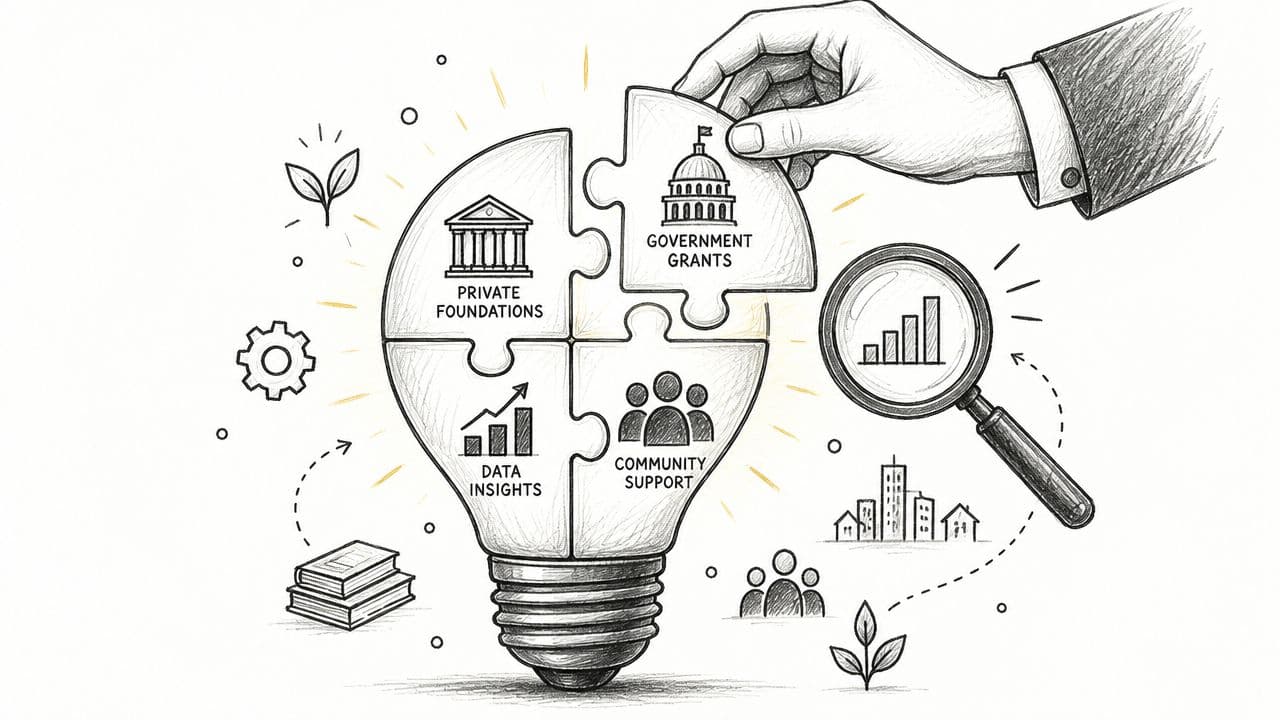
How to Find Grants for Nonprofits: A Complete Guide
Oct 2, 2026 · 10 min read

You've opened three grant databases, saved a collection of promising opportunities, and still can't find a clean match for your organization. One funder serves a different state. Another accepts only universities. A third offers project funding that wouldn't cover the staffing needed to deliver the work. By Friday afternoon, your team has spent hours searching but has no confident prospect list.
That's the central challenge in learning how to find grants for nonprofits today. The issue usually isn't a complete absence of opportunities. It's separating money that's technically available from funding your organization can realistically win, administer, and use well.
Table of Contents
- The Modern Nonprofit Grant Search Landscape
- Why Prioritizing Fit Beats Maximizing Volume
- Reverse-Engineering Prospects with Public Data
- Manual Research Versus Database Tools
- Building an Automated Grant Pipeline
- Creating a Sustainable Annual Strategy
The Modern Nonprofit Grant Search Landscape
Grant research often starts with a keyword. A development associate searches for “youth services,” “housing,” or “food insecurity,” then works through pages of results. That approach feels productive because it generates possibilities quickly, but the list usually mixes incompatible geographies, applicant types, grant purposes, and award expectations.
The scale of the market makes this problem harder. An Urban Institute analysis of government grants and contracts found that in 2023, two-thirds of nonprofits in a nationally representative U.S. panel received at least one government grant or contract, while the average nonprofit generated one-quarter of its revenue from government sources. Those awards appeared in every state, every congressional district, and more than 95% of U.S. counties.
That broad distribution doesn't mean every nonprofit fits every public opportunity. It means geography and applicant eligibility deserve attention before anyone drafts a narrative. The same discipline applies to private philanthropy, where a funder's giving history can reveal whether its stated interests translate into actual support for organizations like yours.
Available money versus usable money
A grant can be available and still be strategically wrong. A restricted award may support a new program but leave no room for supervision, evaluation, technology, or core administration. A funder may welcome your mission but operate outside your service area. An opportunity may match your issue area while requiring a budget or partnership structure your organization can't provide.
For neighborhood-based organizations, resources on funding support for neighborhood projects can help clarify the difference between a locally relevant opportunity and a generic grant listing. A useful overview of different grant types can also help your team classify opportunities before deciding whether they belong in the active pipeline.
The opportunity set rewards systematic scanning
The number of funders isn't the only factor. A USDA Rural Development report on rural philanthropy estimated 75,242 active grantmaking organizations in the United States from 2014 to 2021. It reported average annual grantmaking of about $116 billion, with grant dollars rising 83% over that period while the number of actively operating grantmakers increased by only about 6%. Private foundations represented about 62% of grantmaking organizations on average and issued roughly 21% more in grants each year than public charities.
The practical lesson is straightforward: don't search only for newly announced opportunities. Review funder filings, award histories, and peer recipients. Your advantage comes from building a complete, well-qualified prospect list, then acting when timing and fit align.
Why Prioritizing Fit Beats Maximizing Volume
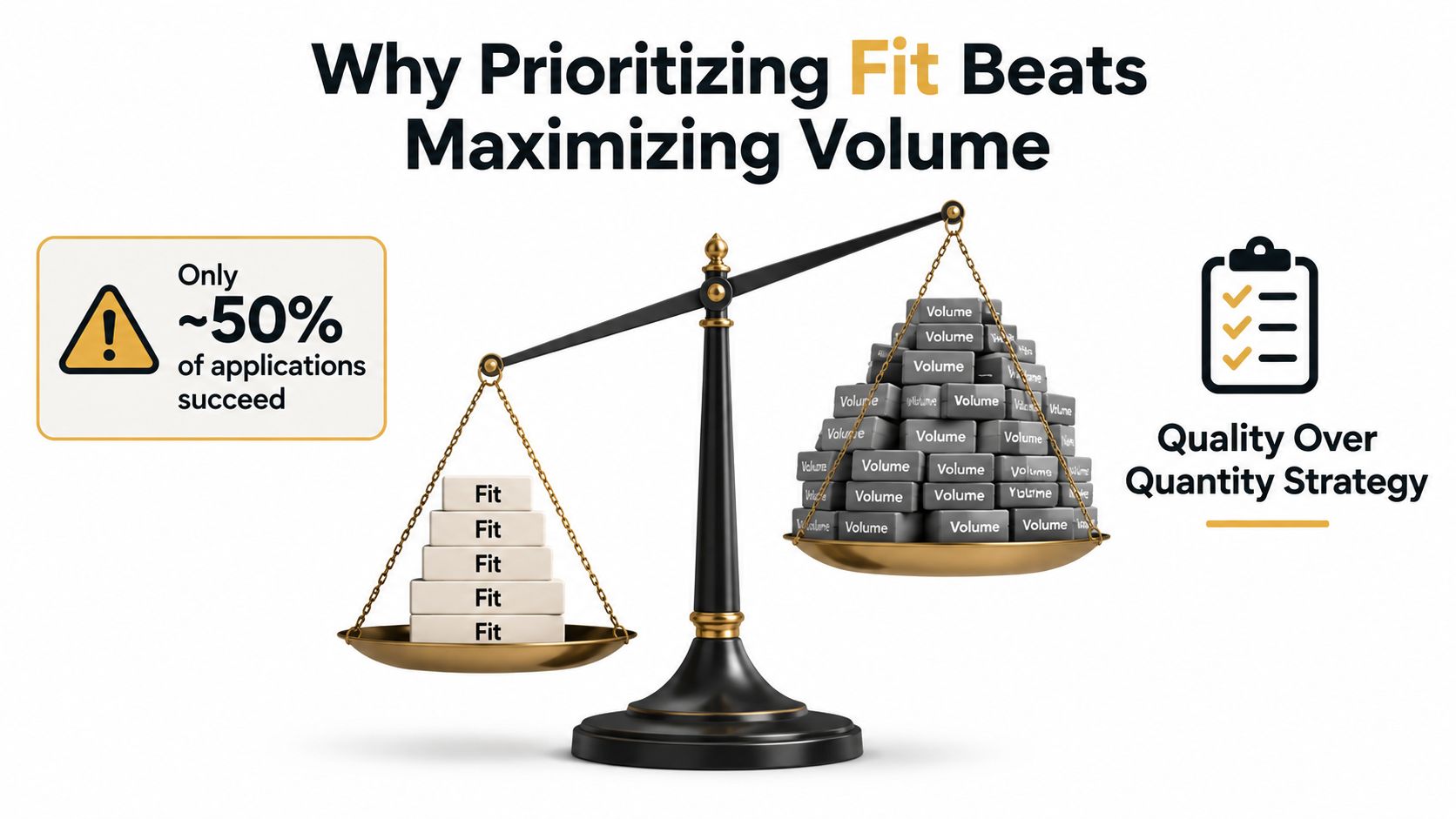
A large spreadsheet of grants can hide a weak fundraising strategy. If your staff spends time reviewing every opportunity that contains a relevant keyword, they'll eventually draft proposals for funders that were never plausible prospects. Qualification should happen before writing, not after the application is nearly complete.
The urgency is greater because nonprofits are not just looking for more money. They're looking for funding that supports the work their budgets and operating models require. The 2025 nonprofit sector survey from the National Funders Network reported that 64% of nonprofits said less than half of their grants and donations in 2024 were unrestricted, 75% said raising unrestricted dollars was a challenge, and 48% reported that grant sizes had shrunk. The same survey found project-based support more common than general operating support, at 41.6% versus 24.2%, while government funding declined across federal, state, and local sources.
Screen out the obvious mismatches
Start with disqualifiers that require no interpretation:
- Geography: Confirm that the funder serves your state, county, city, or defined community.
- Applicant type: Check whether it accepts 501(c)(3) organizations, fiscally sponsored projects, schools, public agencies, or only invited applicants.
- Purpose: Separate general operating support, capacity building, capital, research, and project funding.
- Budget fit: Compare the likely award with the size and cost of the proposed work.
- Application route: Determine whether the funder accepts unsolicited requests or requires an introduction.
- Timing: Check the deadline, award period, reporting schedule, and whether the opportunity is currently open.
A grant prospecting guide from Grantable recommends identifying five to ten similar organizations and examining the 990 filings of foundations that funded them. It also emphasizes removing disqualifiers such as geography, organization type, grant size, and unsolicited-application rules early. That process produces fewer prospects, but each remaining name carries more evidence behind it.
Set a realistic shortlist
A practical workflow begins with the project you need funded, not with a database search box. Define the population served, location, outcomes, delivery period, budget, and funding type. Then expand the search broadly and narrow it to roughly 10–30 funders that match mission, geography, budget, and applicant type, following the workflow recommended by Grant Ready Kentucky's prospect research guidance.
Practical rule: A prospect should earn its place on the active list through evidence of fit, not because its website contains the right keywords.
Volume still matters, but it should follow qualification. The 2025 State of Grantseeking Government Report reported private foundation grants among 74.5% of respondents and federal grants among 43.2%. It also reported a 91.8% success rate among organizations submitting 6–10 applications, which supports a deliberate submission strategy rather than indiscriminate volume. Use application capacity to set a manageable target, then spend your best writing time on the strongest matches.
Reverse-Engineering Prospects with Public Data
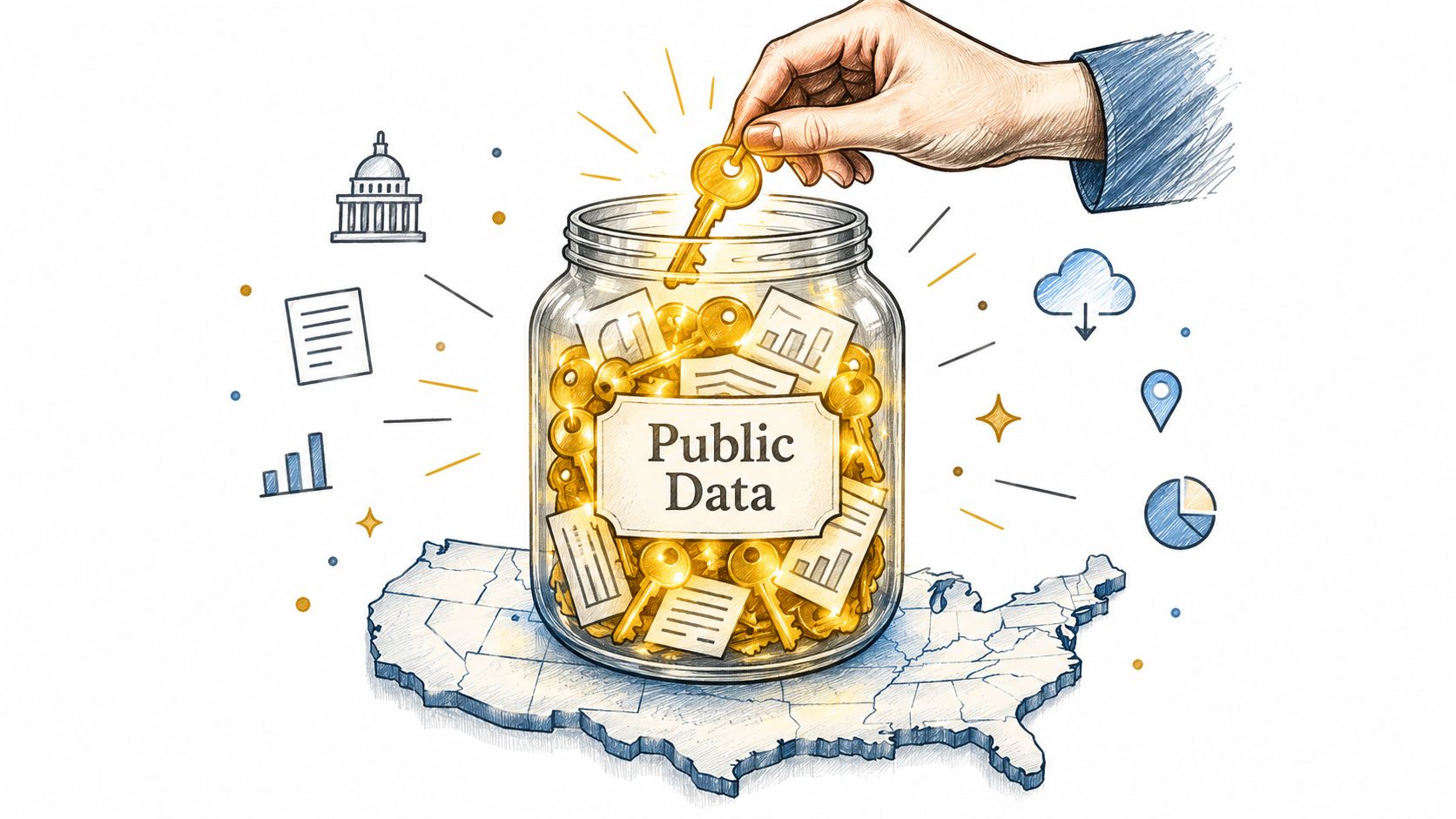
The most useful grant search can begin with a recipient, not a funder. Find organizations delivering work similar to yours, identify who supports them, and then investigate whether those funders have a credible reason to consider your organization.
This is reverse-engineering. Instead of asking a database to return every funder associated with “community health,” you ask a more concrete question: Which funders already support organizations with our mission, location, structure, and program model?
Start with comparable recipients
Choose peer organizations carefully. A national nonprofit with a large research department may attract funders that are irrelevant to a small community organization, even if both work on the same issue. Look for peers with comparable geography, population, operating model, and program scale.
Review their annual reports, funder acknowledgments, public award announcements, and IRS filings. For private foundations, Form 990-PF can show grants paid, recipient names, purpose descriptions, and filing details. Don't treat one award as proof of a perfect match. Look for recurring themes across several recipients.
Use federal award data to find patterns
For public funding, search USASpending.gov for recipient organizations with programs similar to yours. Record the awarding agency, program name, assistance type, location, and award purpose. Then consult the relevant SAM.gov Assistance Listings entry to understand the program's eligibility, administering agency, and intended use.
This workflow answers questions a keyword search often misses:
- Which federal agency funds this type of work?
- Which program mechanism has supported comparable recipients?
- Does the award require a public partnership, specific geography, or special applicant status?
- Is the apparent opportunity a recurring program or a one-time award?
- Does your organization have the infrastructure to manage it?
Mine the funder's own history
Once you identify a foundation, examine its recent filings and recipient mix. Note whether it funds new grantees, makes unsolicited awards, concentrates on a narrow geography, or repeatedly supports a small circle of organizations. Board and trustee relationships can also inform a thoughtful introduction, but they shouldn't replace eligibility screening.
Create a research record for every prospect. Include the source recipient, funder, relevant program, geography, likely funding purpose, application route, and next action. That record turns public information into a qualified pipeline instead of a collection of interesting names.
Manual Research Versus Database Tools
Manual research remains valuable. It's transparent, adaptable, and often the only practical starting point for a small team without a research budget. A development associate can read a foundation's website, inspect a filing, speak with a peer organization, and notice context that a structured database may miss.
The cost is staff time and inconsistency. Information sits in browser tabs, PDFs, email threads, and spreadsheets. One person may flag a geography restriction while another overlooks it. A deadline can change without anyone noticing, and a promising prospect may disappear because nobody recorded the next step.
| Approach | What it does well | Where it creates risk |
|---|---|---|
| Manual websites and filings | Provides context and lets researchers investigate unusual funders | Slow to repeat, difficult to standardize, and vulnerable to missed updates |
| General grant databases | Expands discovery across many opportunities | Search results can still contain weak matches and incomplete qualification |
| Structured matching platforms | Ranks prospects against an organization profile and surfaces fit concerns | Requires accurate profile information and human review before outreach |
| Peer-led research | Reveals funders that already support comparable work | Peer organizations may have different eligibility, relationships, or funding histories |
Match the tool to the decision
A database is most useful before proposal drafting. The system should help answer whether a funder is worth staff attention, not merely display a large number of records. Useful signals include geography, applicant eligibility, likely grant purpose, giving history, openness to new grantees, and budget compatibility.
Grantlas, for example, creates a nonprofit profile from a website URL or EIN, searches private foundations and federal opportunities, and pairs a fit score with plain-English reasoning. It also flags issues such as invitation-only funding, geography mismatch, grant-size concerns, budget range, and applicant eligibility. That kind of screening can reduce repetitive reading, but it doesn't eliminate judgment. Staff still need to verify the current guidelines and assess relationship strategy.
Automation should remove low-value sorting, not remove the human decision about whether a funder's priorities genuinely fit your mission.
Keep manual review at the end
Use automation to produce a shortlist, then open the funder's current guidelines and filings yourself. Confirm the deadline, eligible applicant, award purpose, matching requirement, reporting expectations, and submission process. A ranked result is a research lead, not a guarantee of eligibility or funding.
The strongest setup combines both approaches. A tool handles broad scanning and repeatable flags, while a development professional validates the evidence and decides whether the opportunity belongs in cultivation, application, monitoring, or decline.
Building an Automated Grant Pipeline
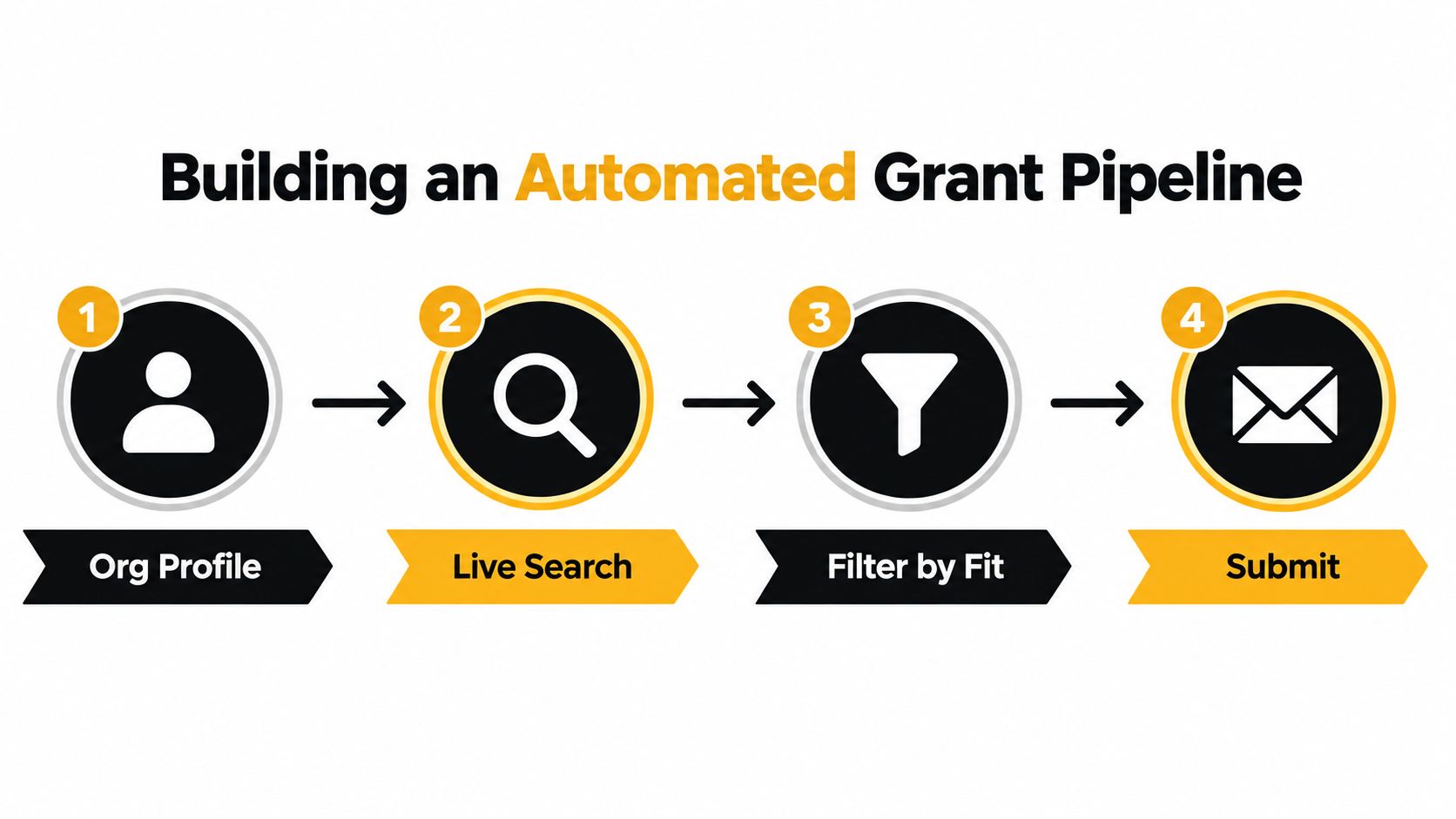
Automation works best when it follows a clear qualification process. Begin by documenting the organization you want the system to recognize, including mission, programs, service geography, populations served, legal structure, budget context, funding preferences, and projects currently seeking support.
Build the workflow
1. Create the organization profile. Use a website URL, EIN, and internal notes to describe what your nonprofit does. Review the generated profile for language that could attract irrelevant results or omit a core program.
2. Search in plain English. Ask for funders supporting a particular population, place, program type, or funding purpose. Natural-language searches are useful for testing variations that a rigid keyword list may miss.
3. Filter by fit. Remove invitation-only opportunities, ineligible applicant types, out-of-area funders, unsuitable grant purposes, and awards that don't fit the project budget. Save a separate monitoring list for prospects that may become relevant later.
4. Set recurring alerts. Use saved searches, weekly digests, and deadline reminders so research continues between application cycles. A Zapier recipe for grant workflows can help connect alerts with the task or project-management systems your team already uses.
Assign ownership
Every qualified prospect needs an owner and a next action. One person might verify eligibility, another might arrange a program conversation, and a grant writer might prepare a concept note. Without ownership, alerts create another inbox instead of a working pipeline.
Record the decision, not just the opportunity. Mark each prospect as pursue, cultivate, monitor, or decline, and add the reason. This history prevents your team from repeating the same research and makes future searches more intelligent.
Creating a Sustainable Annual Strategy
A grant program becomes sustainable when research, relationship-building, proposal development, and reporting operate as one cycle. The annual plan should begin with the organization's funding needs, then connect those needs to a changing list of qualified prospects.
At the start of the planning period, divide needs into clear categories. A program launch may require restricted support, while staffing, evaluation, technology, or leadership development may require flexible funding. This distinction keeps the team from treating every award as interchangeable.
Review the pipeline on a regular rhythm
Run a structured database review each month. Revisit the organization profile as programs change, then re-score or requalify prospects against current priorities. A funder that was unsuitable for a capital project may fit a later operating request, while a previously relevant opportunity may no longer match your geography or budget.
Use a simple review table:
| Review question | Decision it supports |
|---|---|
| Does the funder support our location and applicant type? | Keep or decline |
| Does the award serve the need we're funding? | Assign a project or operating category |
| Has the funder supported comparable organizations? | Prioritize research or cultivation |
| Is there a realistic application route? | Plan outreach or monitor |
| Can we deliver and report on the award? | Confirm internal capacity |
Track submissions, conversations, decisions, renewals, and reasons for decline. Don't use an unsuccessful application as evidence that the funder is permanently unsuitable. Use the feedback, timing, award purpose, and relationship status to decide whether the prospect belongs in a later cycle.
Protect time for proposal quality
A sustainable calendar reserves time for eligibility checks, relationship development, writing, internal review, approvals, submission, and reporting. Your team should know which opportunities deserve a full proposal and which require a short inquiry or introductory conversation.
When a prospect survives qualification, use a disciplined process for writing a grant proposal. Reuse accurate organizational language, but tailor the case for support to the funder's documented interests and giving history. Keep a central library of budgets, program descriptions, outcomes, leadership information, and attachments, with one person responsible for maintaining each item.
Your annual strategy should produce a steady flow of informed decisions, not a constant chase for the newest listing. The strongest development teams know what they need, understand who funds comparable work, and spend proposal time where the evidence supports a credible relationship.
Use Grantlas to build an organization profile, find private foundations and federal opportunities, and review scored matches with plain-English fit reasoning. Set saved searches, deadline reminders, and recurring updates so your team can spend less time sorting mismatches and more time developing well-qualified proposals.